Indian Polity and governance
Tripartite Agreement for Frontier Nagaland Territorial Authority (FNTA):
Context
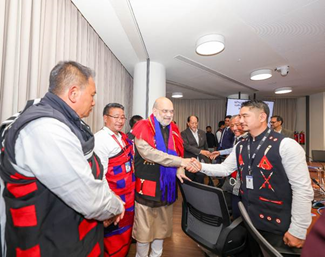
A historic tripartite agreement was signed among the Centre, Nagaland Government, and Eastern Nagaland People’s Organisation (ENPO) to create the Frontier Nagaland Territorial Authority (FNTA).
-
- FNTA covers six eastern Nagaland districts: Tuensang, Mon, Kiphire, Longleng, Noklak and Shamator.
- Devolution of 46 subjects from state to FNTA.
- Aims to address local grievances, uneven development and autonomy demands.
- Administrative body with mini secretariat and budgetary powers.
- Ensures constitutional safeguard under Article 371(A) (does not dilute customary laws).
- Fixed annual financial allocation from Centre for FNTA.
- Expected to improve governance and peace in North-East.
- Negotiated after years of dialogue with ENPO.
- Supports federalism and flexible autonomy within constitutional framework.
- Example of negotiated political solution in insurgency-prone region.
(TH+PIB)
Indian Society & Social Justice
Rajasthan’s First District with 100% Insurance Coverage:
Context
Alwar district (Rajasthan) achieved 100 % insurance coverage under the “Insurance for All by 2047” scheme, a benchmark in social protection.
-
- Alwar covered all eligible adults in nine villages.
- Coverage funded via an NGO – United India Insurance issued policies.
- Model improves social security safety nets.
- Aligns with goal of universal insurance by 2047.
- Door-to-door survey enabled saturation coverage.
- Aims to protect vulnerable populations.
- Helps reduce out-of-pocket expenditure on health.
- Strengthens welfare and risk mitigation frameworks.
- Scalable as a model for other districts.
- Demonstrates public-private partnerships in welfare.
(TOI)
International Developments
India’s Contribution to UN Regular Budget:
Context:
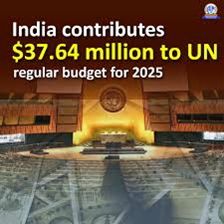
India paid its full assessed contribution of USD 35.18 million to the United Nations Regular Budget for 2026, earning an entry on the UN Honour Roll of member states that clear contributions within 30 days.
-
- India’s timely payment reflects commitment to multilateralism and global governance.
- The UN Regular Budget funds core operations of the United Nations Secretariat.
- Clearing dues early qualifies member states for the Honour Roll.
- Timely contributions are governed by UN financial regulations.
- India’s active financial participation reflects its role in UN peace and development agendas.
- Budget contributions impact India’s influence in UN decision-making forums.
- Several other member states also fulfilled their dues early.
- India’s contribution supports programmes like peacekeeping operations and human rights work.
- Strengthens diplomatic ties and responsibility in global politics.
- Category of Regular Budget is separate from peacekeeping or special funds.
(ET)
Geography, Mapping, Ecology & Environment
Indian Railways’ LNG–Diesel Dual-Fuel DEMU Train:
Context
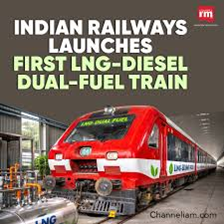
On 6 February 2026, Indian Railways launched the first Diesel–Liquefied Natural Gas (LNG) dual-fuel DEMU train on the Sabarmati route in Gujarat, aiming for emissions reduction and economic savings.
-
- It uses LNG to replace ~40 % of diesel consumption.
- Reduces CO₂ and NOₓ emissions, improving air quality.
- Trial covered >2,000 km before regular service.
- First of its kind in Indian Railways.
- Supports India’s transport decarbonisation goals.
- LNG offers lower energy cost compared to diesel.
- Boosts indigenous implementation of alternative fuels.
- Could be scaled to other routes.
- Aligns with global climate and clean mobility commitments.
(TOI)
Hotter, Drier February Forecast & Impact on Winter Crops:
Context
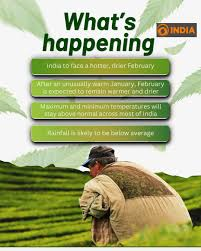
A meteorological forecast anticipates a hotter and drier February 2026 in India, posing risks to wheat and other winter crops amid below-average rainfall conditions.
-
- February expected to be warmer and drier than normal.
- Northwestern states may receive <78 % of average rainfall.
- Wheat, rapeseed and chickpeas are at risk.
- Warm temperatures may accelerate crop growth, reducing yields.
- Low cold-wave days may affect wheat quality.
- Could lead to higher edible oil imports if rapeseed yields fall.
- Climate anomalies affect irrigation and planting cycles.
- Important for food security and minimum support price planning.
- Relevant to climate change adaptation discussions.
- Crop forecast impacts agri policies and budgetary support.
(BT)
Government Schemes and Initiatives
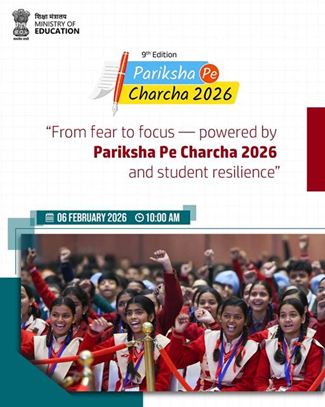
Pariksha Pe Charcha 2026:
Context
The ninth edition of Pariksha Pe Charcha (PPC) was held on 6 February 2026, with the Prime Minister interacting with students, teachers, and parents to tackle exam stress and encourage positive mindset.
-
- PPC is an annual interactive programme with students.
- Held nationwide across multiple locations (Delhi, Guwahati, Raipur, etc.).
- Aims at stress management, confidence building and time management techniques.
- Aligns with National Education Policy 2020 ethos on holistic learning.
- Over 4.5 crore registrations on MyGov.
- Focus on student mental health and exam perspective.
- Broadcast on Doordarshan and digital platforms.
- Highlights government’s focus on education beyond academics.
- Encourages engagement with parents/teachers for supportive environment.
- Concept originated in 2018 to reduce exam anxiety.
(PIB)
Important data/facts
Economy
India-US Trade Concessions – Industrial & Agri Goods Tariffs:
Context
An India-US joint statement revealed concessions on tariffs for metals, autos, pharma, and commitments to import US industrial and agricultural products.
-
- India agreed to eliminate or reduce tariffs on US industrial goods.
- Concessions cover metals, autos, and pharmaceuticals.
- India to import US food and agricultural products.
- Aim is to balance trade and strengthen economic ties.
- Trade talks linked to both countries’ market access.
- Concessions signal willingness to reduce trade barriers.
- Could enhance bilateral investment flows.
- Reflects strategic economic diplomacy.
- Trade deal could impact domestic industries via competition.
- Underscores geopolitical relations with the US.
(PIB+IE)
Defence & Security
Elevated Defence Allocation in Budget:
Context
The Budget 2026–27 significantly increased the defence allocation, highlighting focus on modernisation and self-reliant defence industrial base.
-
- Defence budget for 2026–27: ₹7.85 lakh crore, highest among ministries.
- Represents 19 % increase over previous year’s estimates.
- Share constitutes roughly 67 % of total expenditure.
- Allocates ₹1.39 lakh crore for procurement from domestic industries.
- Boost supports the ‘Atmanirbhar Bharat’ defence push.
- Ex-Servicemen Contributory Health Scheme increased by ~45%.
- Increase aligns with strategic readiness and modernization.
- Focus covers aerospace, naval and land systems.
- Enhances capability for emerging threat domains (cyber, space).
- Reflects long-term geopolitical risk management.
(TH)
Spread the Word