Economy
Union Budget 2026–27: Key Highlights & Policy Shifts:
-
- Context: The Union Budget for 2026–27 was presented in Lok Sabha on 1 February 2026 by Finance Minister Nirmala Sitharaman, marking her ninth consecutive Budget. It emphasizes economic growth, infrastructure, fiscal discipline, services and tech-sector reforms.
- Total expenditure ~ ₹53.5 lakh crore; non-debt receipts ~ ₹36.5 lakh crore.
- Fiscal deficit pegged at 4.3% of GDP, signalling calibrated expansion.
- Capital expenditure increased to ₹12.2 lakh crore to boost infrastructure.
- Seven high-speed rail corridors proposed to strengthen national connectivity.
- High-Powered “Education to Employment and Enterprise” Standing Committee launched for services sector reforms.
- Tax holiday for AI Data Centres & Cloud investments until 2047 to attract global capital.
- Scheme for five Regional Medical Hubs to promote medical tourism.
- Threshold for Safe Harbour for IT services raised from ₹300 cr to ₹2000 cr.
- Focus on sectors: MSME, AVGC Labs in schools & colleges, Biopharma Shakti.
- Defence & security allocations increased significantly (e.g., MHA forces, paramilitary).
(PIB+ET)
Geography, Mapping, Ecology & Environment
Inclusion of Heatwaves & Lightning as National Disasters:
-
- Context: The 16th Finance Commission recommended recognizing heatwaves and lightning as nationally notified disasters to enable mitigation funding and early warning enforcement.
- Finance Commission under Article 280 recommends fiscal relations and disaster allocations for 2026–31.
- Record heat in 2024 made heatwaves more lethal and frequent.
- Lightning strikes increased dramatically, causing high fatalities.
- National disaster status enables central mitigation funds.
- Improves early warning dissemination accountability.
- Urban heat island effects strain infrastructure (power/water).
- Heat Action Plans exist in multiple states.
- Lightning mitigation (MPLS) focuses on high-risk states.

(IE+DTE)
New Income Tax Act, 2025:
-
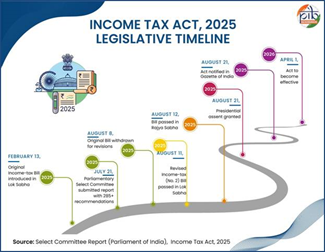
- Context: The Union Budget 2026–27 announced the coming into force of the Income Tax Act, 2025 from 1 April 2026, replacing the old 1961 law.
- Effective from 1 April 2026.
- Simpler tax compliance procedures and forms.
- Staggered filing deadlines by taxpayer category.
- Extended revision window till March 31 of next year.
- Certain defaults decriminalised.
- Special Foreign Asset Disclosure Scheme (FAST DS) introduced.
- Penalty and prosecution rationalised.
- Post-reassessment return update allowed at extra tax.
(PIB)
Livestock & Fisheries Boost in Budget 2026–27:
-
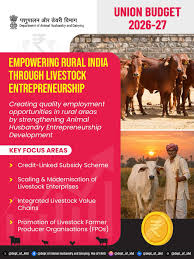
- Context: Budget 2026–27 prioritized livestock and fisheries as growth drivers in agriculture.
- Allocation to fisheries, animal husbandry, & dairying increased ~27%.
- Services sectors grew faster than crops, contributing significantly to farm income.
- 20,000+ veterinary professionals target.
- Loan-linked subsidies for private infrastructure in animal care.
- Enhanced Rashtriya Gokul Mission funds.
- Inland reservoir fisheries development.
- Coastal employment through women-led groups.
- Export reforms including EEZ catch duty exemptions.
(TH+PIB)
RBI Monetary Policy:
-
- Context: On 2 February 2026, the Reserve Bank of India (RBI) maintained the policy repo rate amid stable inflation.
- Policy repo rate maintained at 6.50%.
- CPI inflation around 4.2% within target band.
- GST collections for Jan 2026 were ₹1.78 lakh crore (11% YoY).
- Banking NPAs declined to about 2.8%.
- Forex reserves around $675 bn (~11 months import cover).
- Mixed stock market trends.
- RBI’s stance keeps growth-inflation balance.
- Investor sentiment influenced by global dynamics.

(PIB)
Science & Technology
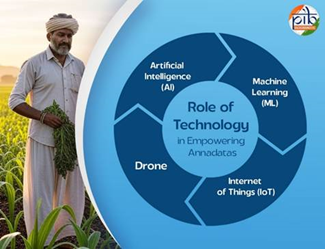
Digital Economy & Technology Push – AI, Semiconductors, AVGC & Farms:
-
- Context: Government announced structural incentives in Budget 2026 aimed at deepening technology ecosystem, semiconductor manufacturing and digital agriculture support.
- AI Data Centres: Tax holiday till 2047 to attract global cloud/AI infra.
- Semiconductor Mission 2.0: Deepen design, manufacturing ecosystem.
- ‘Bharat-VISTAAR’: Multilingual AI tool to boost farm decision-making.
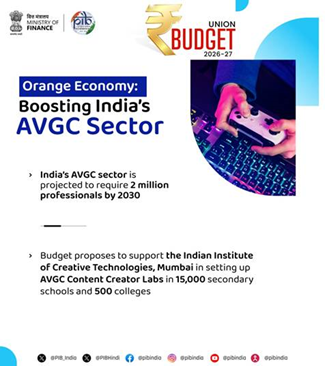
- AVGC Labs in 15,000 schools expand digital creative economy.
- Potential to improve rural tech adoption and innovation pipeline.
(PIB)
Government Schemes & Initiatives
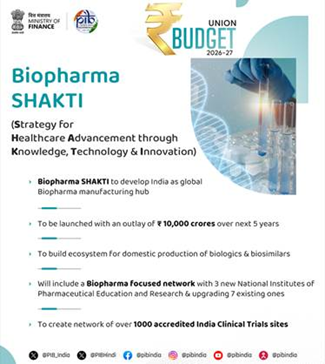
Biopharma Shakti Initiative:
-
- Context: Union Budget 2026–27 launched the Biopharma Shakti initiative to strengthen India’s biopharmaceutical ecosystem.
- ₹10,000 crore outlay over 5 years.
- Targets biologics and biosimilars production.
- New and upgraded National Institutes of Pharmaceutical Education & Research (NIPERs).
- Over 1,000 accredited clinical trial sites planned.
- Strengthened regulatory agency (CDSCO) scientific cadre.
- Cluster-based chemical parks for pharma and allied biotech.
- Support for traditional medicine exports and research.
- Integration of AI tools (e.g., Bharat-VISTAAR) for farm and bio applications.
(IE+PIB)
Spread the Word