Indian Polity & Governance
Sampoornata Abhiyan 2.0 – NITI Aayog’s Inclusive Development Drive:
-
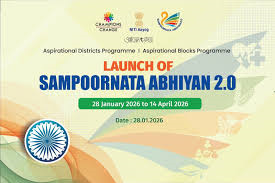
- Context: Launched end-January 2026, Sampoornata Abhiyan 2.0 is a national action to saturate essential services across under-developed districts and blocks, focusing on last-mile delivery of government services.
- NITI Aayog launched Sampoornata Abhiyan 2.0 on 28 January 2026 targeting essential services saturation.
- Runs until 14 April 2026, focusing on health, nutrition, sanitation, education, etc.
- Targets Aspirational Districts and Blocks with monthly monitoring and data-based reviews.
- Community participation and local implementation are key components.
- Aims to reduce disparities and strengthen outcomes in underserved areas.
- Integrates with broader SDG and national development goals.
- Encourages cross-sectoral coordination across ministries and states.
- Progress is tracked via a national dashboard and field reports.
(PIB)
Economy
Economic Survey:
-
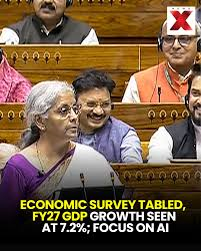
- Context: The Economic Survey 2025-26 was tabled in Parliament by FM Nirmala Sitharaman on 29 January 2026 just ahead of the Union Budget. It assesses the economy’s performance and outlines growth prospects, fiscal health, and structural themes for policy.
- Economic Survey 2025-26 provides comprehensive analysis of macro-economic trends in India.
- It reports estimated GDP growth of 7.4% in FY26 underscoring resilience amid global uncertainty.
- Agriculture remains a central driver of inclusive growth and rural livelihoods.
- Horticulture output reached record highs.
- Banking sector shows improved asset quality (NPAs declining).
- MSMEs account for ~35% of manufacturing & ~48% of exports.
- Rural infrastructure and digital connectivity expanded significantly.
- Innovation performance improved with better global ranking.
- Agriculture’s decadal growth was ~4% (FY16-25).
- Survey highlights risks like over-dependence on foreign AI tech.
(PIB)
India-Canada Bilateral Cooperation:
-
- Context: On 29 January 2026, a high-level meeting took place in New Delhi between Health and Chemicals & Fertilizers Minister JP Nadda and Canadian counterpart Tim Hodgson focusing on fertilizer & potash cooperation.
- Talks held to enhance cooperation on potash and fertilizer security.
- Potash is essential for crop nutrition and soil health.
- India is a major importer; diversification of supply is strategic.
- Joint focus on tech & investment collaboration.
- Strengthens India-Canada diplomatic engagement.
- Agriculture being critical for food security in India.
(PIB)
Geography, Mapping, Ecology & Environment
Solid Waste Management Rules, 2026 – New Framework for Urban/Rural Waste:
-
- Context: On 29 January 2026, the Ministry of Environment, Forest, and Climate Change notified the Solid Waste Management (SWM) Rules, 2026, replacing earlier rules from 2016. This new regulatory framework aims to strengthen waste segregation, recycling, and enforcement mechanisms across India.
- SWM Rules, 2026 notified under the Environment (Protection) Act, 1986; effective from 1 April 2026.
- Replaces the SWM Rules, 2016 and broadens scope to both urban and rural governance.
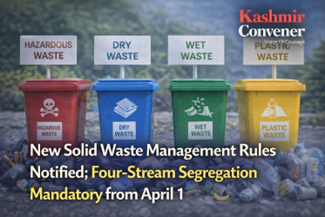
- Mandates four-stream segregation at source – wet, dry, sanitary, and special care waste.
- Introduces Polluter Pays Principle, enabling environmental compensation for non-compliance.
- Defines Bulk Waste Generators with specific thresholds; they must meet waste management responsibilities.
- Encourages circular economy pathways – reuse, recycling, and waste-to-fuel recovery.
- Limits landfills to inert/non-recyclable waste; promotes biomining and remediation of legacy dump sites.
- Digital tracking via a centralised portal increases transparency and accountability.
- Aligns with global sustainability goals and Clean India objectives.
(IE+DTE)
Science & Technology
IIM Ahmedabad AI School MoU:
-
- Context: An MoU was exchanged on 29 Jan for setting up Krishnamurthy Tandon School of AI at IIM Ahmedabad to strengthen AI education and research.
- MoU for establishing AI school at IIMA signed in presence of Education Minister.
- Focus: cutting-edge AI research & talent development.
- Strengthens India’s AI ecosystem in academia.
- Alignment with national AI priorities.
- Will attract global talent and partnerships.
- Reinforces interdisciplinary learning with management & tech.
(PIB)
Defence & Security
Beating Retreat Ceremony 2026:
-
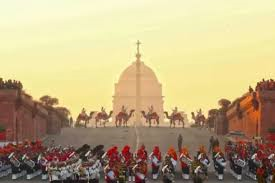
- Context: On 29 January 2026, the Beating Retreat ceremony marked the formal end to India’s Republic Day 2026 celebrations at Vijay Chowk, New Delhi, a centuries-old military tradition featuring massed bands from the Army, Navy and Air Force.
- Beating Retreat is held on 29 Jan, concluding Republic Day festivities.
- Venue: Vijay Chowk, facing Rashtrapati Bhavan.
- Massed military bands perform traditional and patriotic tunes.
- President of India presides as Supreme Commander of Armed Forces.
- PM Modi attended and highlighted India’s military heritage.
- It symbolizes discipline, tradition and service of Armed Forces.
- The ceremony features participation from CAPFs’ bands too.
- “Amar Jawan” formation tribute included.
- Musical repertoire includes national tunes like Saare Jahan Se Achcha.
(ET)
Government Schemes
Kerala Introduces Insurance Scheme for School Children:
-
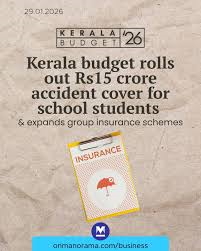
- Context: the Kerala Budget 2026-27 announced life and accident insurance coverage for school children and informal workers. This initiative expands the social safety net for vulnerable groups.
- Scheme also covers autorickshaw, taxi and lottery workers, part of the unorganised sector.
- These schemes aim to provide social security for workers often outside formal coverage.
- Implementation involves cooperation with the State Insurance Department.
- Expanding safety nets aligns with Kerala’s welfare priorities.
- School-based insurance promotes child welfare and educational continuity.
- Coverage for informal workers helps reduce economic vulnerability.
(TH)
Important data/facts
India Tourism Roadshow in Nagpur:
-
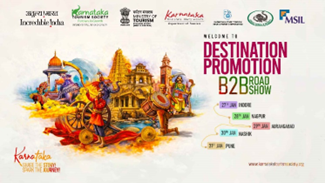
- Context: On 29 January, the Ministry of Tourism organized a domestic tourism roadshow in Nagpur to promote inter-state tourism linkages.
- Organized by India Tourism in association with Karnataka Tourism.
- Aim: showcase domestic tourism opportunities.
- Enhances state-to-state tourism collaboration.
- Focus on cultural, heritage and nature circuits.
- Aligns with increased international arrivals trend.
- Supports rural and regional tourism promotion.
- Expected to stimulate local economies.
(PIB)
Miscellaneous
NCSM Interactive Exhibition at Bharat Parv:
-
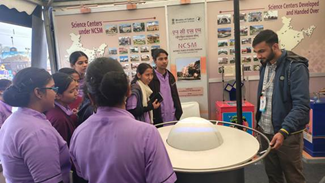
- Context: As part of Bharat Parv 2026 (a Republic Day cultural festival), the National Science Centre, Delhi is showcasing an interactive science exhibition to engage visitors.
- Organised at Red Fort Lawns as part of Republic Day celebrations.
- NCSM interactive exhibition promotes science awareness.
- Bharat Parv runs from 26–31 Jan 2026.
- Event supported by Ministry of Tourism.
- Highlights India’s cultural and scientific achievements.
- Outreach to students and public audiences.
- Interactive exhibits deepen STEM interest in youth.
- Science museum units engage with diverse themes.
(PIB)
PRACTICE MCQ’S
Q.1 Consider the following statements about the Economic Survey 2025-26:
1. It projected India’s GDP growth for FY26 at 7.4%.
2. It highlighted MSMEs contributing nearly 31% to India’s GDP.
3. It advises increased reliance on foreign AI systems for innovation.
Which of the statements given above is/are correct?
a) 1 and 2 only
b) 2 and 3 only
c) 1 only
d) 1, 2 and 3
Answer: A
Explanation: Statement 1 is correct as the Survey estimates India’s growth at ~7.4%. Statement 2 is correct: MSMEs account for ~31% of GDP. Statement 3 is incorrect – the Survey cautions against over-dependence on foreign AI.
Q.2 Which of the following sectors did the Economic Survey 2025-26 identify as central to achieving inclusive growth in India?
a) Services
b) Agriculture
c) Financial sector
d) Information Technology
Answer: B
Explanation: The 2025-26 Economic Survey stresses agriculture as a core driver of inclusive growth and rural livelihoods.
Q.3 The Beating Retreat ceremony in India is associated with:
a) Commencement of the Budget Session of Parliament
b) Anniversary of Indian Independence
c) Conclusion of Republic Day celebrations
d) Annual Naval fleet review
Answer: C
Explanation: The Beating Retreat is a ceremonial event held on 29 January each year signifying the close of Republic Day festivities.
Q.4 In India’s Beating Retreat ceremony, which of the following statements are true?
1. Held on 26 January every year.
2. Features bands from Army, Navy and Air Force.
3. President of India attends as Supreme Commander.
Select the correct answer using the code below:
a) 1 and 2 only
b) 2 and 3 only
c) 1 and 3 only
d) 1, 2 and 3
Answer: B
Explanation: Statement 1 is incorrect; the ceremony is on 29 January. Statements 2 and 3 are correct.
Q.5 Potash is primarily used in agriculture for:
a) Controlling pests
b) Irrigation purposes
c) Seed treatment
d) Providing potassium nutrients to crops
Answer: D
Explanation: Potash (potassium salts) enhances water retention, disease resistance and overall crop yields in plants.
Q.6 Bharat Parv is primarily associated with:
a) A defence exercise
b) A monsoon farming scheme
c) A space science symposium
d) A cultural festival coinciding with Republic Day
Answer: D
Explanation: Bharat Parv is a cultural fest held to celebrate India’s Republic Day showcasing crafts, cuisine and science exhibits.
Q.7 Sampoornata Abhiyan 2.0 primarily focuses on:
a) Urban infrastructure financing
b) Saturation of essential government services in under-developed areas
c) Military modernization
d) Tax reform
Answer: (B)
Explanation: Sampoornata Abhiyan 2.0 is aimed at closing delivery gaps in essential services such as health, nutrition and sanitation in backward regions.
Q.8 The 2026-27 Kerala state budget introduced a scheme offering insurance coverage to:
a) Only government employees.
b) Only senior citizens above 75 years.
c) School children, auto & taxi workers and lottery vendors.
d) Only private sector employees.
Answer: C
Explanation: Kerala’s budget expanded insurance coverage for school children and unorganised sector workers including autorickshaw, taxi and lottery workers.
Spread the Word