Indian Polity and governance
International Data Privacy Day – Data Protection & Digital Governance:
-
- Context: 28 January is observed as International Data Privacy Day to raise awareness about personal data protection and responsible digital governance. This year’s observance highlighted India’s expanding digital ecosystem and the need for stronger data privacy frameworks.
- International Data Privacy Day commemorates the signing of Convention 108, the first legally binding international treaty on data protection (Council of Europe, 1981).
- It is observed globally to underscore the importance of protecting personal data in the digital age.
- India is the third-largest digitalised economy, with extensive digital public platforms like Aadhaar, UPI, digiLocker, and health and governance systems.
- The Digital Personal Data Protection (DPDP) Act, 2023 and supporting DPDP Rules, 2025 form the backbone of India’s legal framework on privacy.
- Budget 2025-26 allocated significant funds for cybersecurity to protect digital public infrastructure against misuse and breaches.
- Data protection reinforces the Right to Privacy as held by the Supreme Court in Puttaswamy vs Union of India (2017).
- The observance highlights the shared responsibility of governments, digital platforms, and citizens in ensuring data safety.
- As India’s digital footprint expands, data privacy becomes key to trust, inclusion, and digital economic growth.
- Secure data practices help mitigate cyber threats, frauds, and misuse of personal information.
- Data protection frameworks are also essential for enabling responsible innovation and digital service delivery.

(PIB)
New Aadhaar App Dedicated to the Nation:
-
- Context: On 28 January 2026, the Unique Identification Authority of India (UIDAI) dedicated a new Aadhaar App to the nation, focusing on user control, security, and ease of digital identity verification.
- The new Aadhaar App was launched by the Minister of State for Commerce & Industry and Electronics & IT.
- Designed to be a next-generation mobile application for Aadhaar holders.
- Emphasises privacy first with selective sharing and consent controls.
- Allows users to show, share, and verify their Aadhaar digitally.
- It reinforces India’s digital identity infrastructure as part of Digital Public Infrastructure (DPI).
- The app aims to make digital identity verification more secure, seamless, and citizen-centric.
- It expands the utility of Aadhaar in service delivery and digital governance.
- This initiative aligns with data privacy priorities as underscored by Data Privacy Day.
- Enhances convenience for residents in accessing e-KYC and verification services.
- The focus on consent and control is crucial for building trust in digital platforms.

(PIB)
Supreme Court on Governors & State Bills:
-
- Context The Supreme Court reiterated concerns over indefinite delays by Governors in granting assent to State Bills.
- Article 200 governs Governor’s assent to State Bills.
- Governor can: give assent, withhold assent, return bill, or reserve for President.
- Constitution does not prescribe a time-limit.
- SC held that indefinite delay violates constitutional morality.
- Governor is bound by aid and advice except in discretionary areas.
- Delay can disrupt federal balance.
- Reservation of Bills must be exceptional, not routine.
- Judicial review is permissible in case of mala fide delay.
(TH)
Economy
Reserve Bank of India (RBI) Draft Disaster Relief Framework for Banks:
-
- Context: To strengthen financial resilience against natural disasters, the Reserve Bank of India (RBI) released a draft framework on 27–28 January 2026 guiding banks on relief and support measures for borrowers affected by calamities.
- The RBI’s draft guidelines propose a structured disaster relief framework for banks to support borrowers impacted by natural calamities like floods and landslides.
- The framework encourages banks to include climate risk assessment in credit policies.
- Relief options include rescheduling repayments, temporary moratoriums, and converting interest into separate facilities.
- It aims to move beyond ad hoc measures to principled resolution plans.
- Banks are expected to adopt a proactive risk management approach in disaster situations.
- The draft is to be implemented from 1 April 2026 if finalised.
- The framework aligns with India’s larger agenda of climate resilience and sustainable finance.
- Disaster relief frameworks can prevent financial exclusion for vulnerable borrowers post-calamity.
(ET)
RBI’s ₹1 Lakh Crore Open Market Operations (OMO) to Ease Liquidity Stress:
-
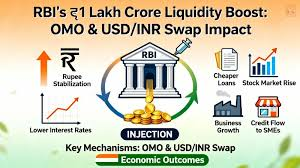
- Context: As of 28 January 2026, the Reserve Bank of India (RBI) decided to accelerate its Open Market Operation (OMO) purchases worth ₹1 lakh crore, a key step to manage tightening liquidity and rising yields.
- RBI will buy government securities worth ₹1 lakh crore via OMO to inject liquidity.
- OMO purchases are scheduled in two tranches of ₹50,000 crore each on 29 Jan and 5 Feb 2026.
- Liquidity surplus had fallen sharply to around ₹56,987 crore, below the comfortable range of ₹1.5–2 lakh crore.
- 10-year benchmark G-Sec yields rose to an 11-month high of 6.72 %.
- OMO purchases help ensure adequate system liquidity and ease interest rate pressures.
- A tighter liquidity situation can hamper credit growth and investment.
- Such OMOs are a conventional monetary policy tool for liquidity management.
- These operations signal RBI’s readiness to support financial markets amid tightening conditions.
(ET)
Geography, Mapping, Ecology & Environment
Avalanche Warning in Jammu & Kashmir’s Ganderbal:
-
- Context: Weather authorities issued an avalanche warning in vulnerable parts of Ganderbal district (Jammu & Kashmir) after a recent snow incident, raising concerns about disaster preparedness in snowbound regions.
- The warning was issued for areas around Sonamarg due to heavy snow conditions.
- Avalanche risks were elevated after recent snow events.
- Authorities deployed State Disaster Response Forces to monitor conditions.
- The region is strategically important due to tourism and connectivity via NH1.
- Avalanche hazards pose threats to life, infrastructure and communication links.
- Disaster risk management protocols are crucial in Himalayan terrain.
- Forecasting and early warning systems help mitigate impacts.
- Local administrations often coordinate with SDRF and Army for rescue.
(ET)
Science & Technology
Maharashtra Launches India’s First Menopause Clinics:
-
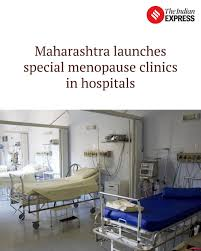
- Context: Maharashtra became the first Indian state to launch dedicated menopause clinics in government hospitals to address comprehensive health needs of women in mid-life.
- Clinics launched across government hospitals and urban health facilities in Maharashtra.
- This is the first state-led programme dedicated to menopause care in India.
- It addresses physical, hormonal, and mental health issues of menopausal women.
- Services include medical consultation, counselling, screenings and treatment.
- Clinics recognise menopause as a natural life stage requiring structured healthcare support.
- Provides a one-stop care model reducing fragmentation in care delivery.
- Targets common health risks like osteoporosis, heart diseases, sleep disorders etc.
- Counselling services aim to address mental health and social stigma often associated with menopause.
- Can serve as a model for other states to adopt similar women’s health initiatives.
(IE)
Kerala Declares Bacillus subtilis as State Microbe:
-
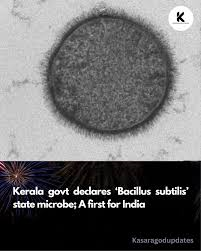
- Context: On 28 January 2026, Kerala officially adopted Bacillus subtilis as its State Microbe, the first state in India to do so, highlighting microbial science’s role in health, agriculture, and environment.
- Bacillus subtilis is a probiotic, beneficial bacterium known for promoting gut health and immunity.
- Kerala became the first Indian state to officially recognise a microbe as a State Microbe.
- The move underscores the growing importance of microbiome science in public health, agriculture, and environmental sustainability.
- Bacillus subtilis improves soil fertility by enhancing nutrient cycling and suppressing plant pathogens.
- It is widely used as a probiotic supplement to improve digestion and metabolic health.
- The declaration was announced by the Kerala Chief Minister in Thiruvananthapuram.
- The state also launched a Centre of Excellence in Microbiome (CoEM) to promote research across domains like health, agriculture, nutrition, and environment.
- This initiative aligns with India’s broader emphasis on microbiology research and biotechnology for sustainable development.
- Microbiome research has implications for antibiotic resistance, food security, and climate resilience.
(TH)
Spread the Word