Geography, Mapping, Ecology & Environment
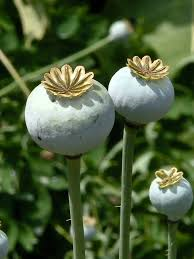
POPPY PLANT:
-
- CONTEXT: India continues as a major legal supplier of opium alkaloids for global pharmaceutical use.
- Government promoting CPS (Concentrated Poppy Straw) method to:
- Reduce diversion into illegal markets
- Improve transparency.
- Rising concerns over: Illegal poppy cultivation in border and insurgency-affected areas (e.g., parts of NE India).
- Government promoting CPS (Concentrated Poppy Straw) method to:
- NDPS Act enforcement strengthened using satellite imagery and drone surveillance.
- Scientific name: Papaver somniferum
- Family: Papaveraceae
- Source of opium, from which morphine, codeine, thebaine are derived.
- Native to Mediterranean region.
- Legal & Regulatory Aspects (India):
- Cultivation is strictly regulated under: NDPS Act, 1985
- Only licensed farmers can cultivate poppy.
- Central Bureau of Narcotics (CBN) controls:
- Licensing
- Supervision
- Procurement of opium latex
- Legal cultivation mainly in:
- Madhya Pradesh
- Rajasthan
- Uttar Pradesh
- Uses:
- Medical: Painkillers, cough suppressants, anti-diarrheal drugs.
- Pharmaceutical industry: Essential raw material for opioid medicines.
- Seeds (khus-khus):
- Non-narcotic
- Used in food (bakery, Indian cuisine).
- Agricultural conditions: requires
- Cool climate
- Well-drained loamy soil
- Latex extracted by lancing the unripe capsule.
- International context: India is one of the few countries permitted by UN to cultivate opium legally.
- Regulated under: UN Single Convention on Narcotic Drugs, 1961
- CONTEXT: India continues as a major legal supplier of opium alkaloids for global pharmaceutical use.
(TH)
CHERNOBYL NUCLEAR POWER STATION:
-
- CONTEXT: During Russia–Ukraine conflict (since 2022):
- Chernobyl site was temporarily occupied by Russian forces.
- Raised global concerns over nuclear safety during armed conflict.
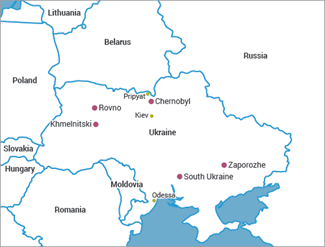
- Located near Pripyat, northern Ukraine (then USSR).
- Situated close to the Ukraine–Belarus border.
- Named after the nearby town Chernobyl.
- Reactor type: RBMK (Reaktor Bolshoy Moshchnosti Kanalny). Graphite-moderated, light-water cooled (unique to USSR).
- Chernobyl Disaster (1986):
- Date: 26 April 1986
- Reactor involved: Unit 4
- Cause:
- Flawed reactor design (positive void coefficient)
- Operator errors during a safety test
- Explosion released massive radioactive material into the atmosphere.
- Worst nuclear accident in history (INES Level 7).
- Radioactive fallout spread across:
- Ukraine
- Belarus
- Russia
- Parts of Europe
- Creation of Exclusion Zone (≈30 km radius).
- Severe health & environmental impacts:
- Thyroid cancer cases
- Long-term ecological contamination
- Zone now acts as a living laboratory for:
- Radiation ecology
- Evolutionary biology
- Despite radiation, wildlife has rebounded (wolves, lynx).
- CONTEXT: During Russia–Ukraine conflict (since 2022):
(TH)
Greater Kruger:
-
- CONTEXT: Rhino poaching remains a major concern. Greater Kruger often cited in reports on:
- Wildlife crime
- Illegal wildlife trade
- Increased use of: AI, drones, thermal cameras for anti-poaching
- Highlighted globally as a successful model of public-private conservation partnerships.
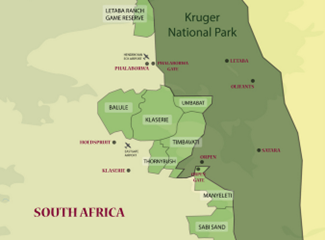
- Greater Kruger Landscape = Kruger National Park + adjoining private & community reserves (South Africa).
- Located in north-eastern South Africa, near Mozambique border.
- Part of the Greater Limpopo Transfrontier Conservation Area (GLTFCA), South Africa, Mozambique, Zimbabwe.
- Key feature: Removal of internal fences, free movement of wildlife (landscape-level conservation).
- Biodiversity hotspot of African savannah ecosystem; habitat of the Big Five (lion, leopard, elephant, rhino, buffalo).
- Conservation significance:
- Public-private-community partnership model
- Major global focus on rhino conservation & anti-poaching
- Transboundary relevance: Promotes wildlife migration, ecological connectivity, and regional cooperation.
- CONTEXT: Rhino poaching remains a major concern. Greater Kruger often cited in reports on:
(TH)
Science & Technology
RASHTRIYA VIGYAN PURASKAR – 2025:
-
- CONTEXT: Rashtriya Vigyan Puraskar – 2025 was presented by President of India, Smt. Droupadi Murmu, at Rashtrapati Bhavan.
- It was the second edition of the award.
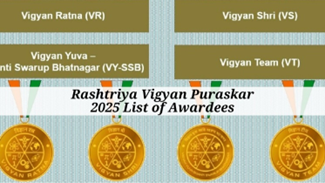
- 24 awards were given in four categories:
- Vigyan Ratna
- Vigyan Shri
- Vigyan Yuva
- Vigyan Team
- 24 awards were given in four categories:
- Objective: To recognise outstanding contributions by scientists, technologists, and innovators in science & technology and innovation.
(PIB)
Flagship National Conclave on “AI Evolution – The Mahakumbh of AI”:
-
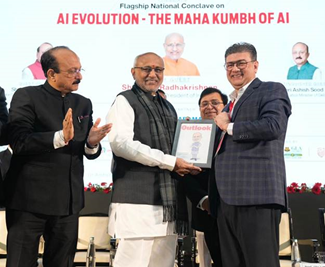
- Flagship National Conclave on “AI Evolution – The Mahakumbh of AI” held in New Delhi.
- Presided by: Vice President of India, Shri C.P. Radhakrishnan.
- Organised by: Guru Gobind Singh Indraprastha University, AICTE, and Outlook magazine.
- Key messages:
- Artificial Intelligence is a present reality shaping multiple sectors (healthcare, governance, finance, education, security).
- India must leverage AI ethically for welfare and development.
- AI curricula launched; AI should be part of school & college education to build future ready skills.
- India’s demographic dividend (~65% under 35) can help it lead in AI globally.
- AI is critical for Aatma Nirbhar and Viksit Bharat @ 2047 vision.
(PIB)
History, Art & Culture
Priceless Thanjavur Artwork Transported by India Post:
-
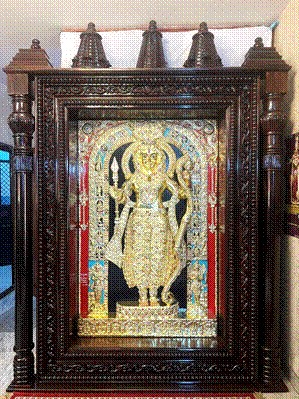
- Department of Posts executed a special high‑value logistics mission, transporting a priceless Thanjavur painting of The Divine Shri Ram from Bengaluru to Ayodhya via its Logistics Post service.
- The artwork: traditional Thanjavur style, gold base with precious/semi‑precious stones, measuring 12 ft × 8 ft, weighing ~800 kg.
- Transported under continuous supervision, over ~1,900 km, involving multiple postal circles (Karnataka – Telangana – Maharashtra – MP – UP).
- First‑of‑its‑kind high‑value Logistics Post consignment showcasing India Post’s enhanced capability in specialized and secure logistics.
- Delivered and installed at Shri Ram Janmabhoomi Teerth Kshetra, Ayodhya, demonstrating support for national heritage and cultural preservation.
(PIB)
Personalities in news
Vinod Kumar Shukla:
-
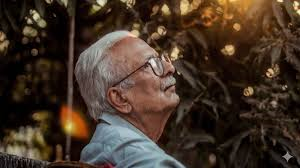
- Context: Demise on 23 December 2025 at AIIMS Raipur due to age-related ailments, widely mourned in literary circles.
- Indian Hindi writer, poet, novelist, and teacher known for magic-realist, lyrical simplicity in prose and poetry.
- Born 1 January 1937 in Rajnandgaon (Chhattisgarh); passed away 23 December 2025 at age 89.
- Academic background:Sc. in Agriculture; began career as lecturer before full-time writing.
- Literary contributions: Blended everyday life with subtle profundity; often termed an innovator in modern Hindi prose.
- His journey as a writer began in 1971, when his first poetry collection Lagbhag Jaihind was published.
- Key works include:
- Naukar Ki Kameez (adapted into film)
- Deewar Mein Ek Khidki Rehti Thi
- Khilega To Dekhenge
- Ek Chuppi Jagah
- Kavita Se Lambi Kavita
- His writing is noted for fusing poetry and prose, elevating ordinary life to poetic insight.
- Awards & Recognition:
- 59th Jnanpith Award (2024/2025): the highest literary honour in India; first person from Chhattisgarh to receive it.
- Sahitya Akademi Award (1999) for Deewar Mein Ek Khidki Rehti Thi.
- PEN/Nabokov Award (2023), first Indian recipient, signifying global recognition.
(TH+PIB)
Chaudhary Charan Singh:
-
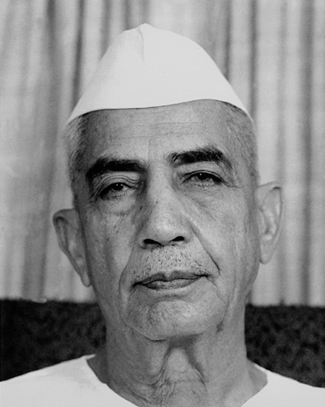
- CONTEXT: Birth anniversary on 23 December.
- Born 23 Dec 1902, Noorpur (UP); Died 29 May 1987.
- Known as “Champion of Farmers”; lawyer turned politician.
- 5th Prime Minister of India (1979–1980); also Deputy PM & Agriculture Minister.
- Advocated farmers’ rights, land reforms, cooperative farming, and state autonomy.
- Founded Lok Dal; influenced future agrarian policies and welfare schemes.
(PIB)
Miscellaneous
Prime Minister shares Sanskrit Subhashitam emphasising the importance of Farmers:
-
- The Subhashitam conveys that even when possessing gold, silver, rubies, and fine clothes, people still have to depend on farmers for food.
“सुवर्ण-रौप्य-माणिक्य-वसनैरपि पूरिताः।
तथापि प्रार्थयन्त्येव कृषकान् भक्ततृष्णया।।”
(PIB)
Spread the Word