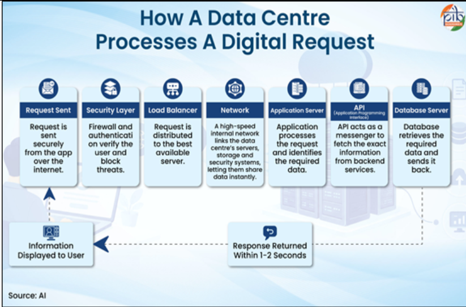
Topic 1: World Telecommunication Development Conference (WTDC-25)
GS Paper: GS Paper III – Science and Technology, Digital Infrastructure | GS Paper II – International Cooperation
Context: At the World Telecommunication Development Conference (WTDC-25) in Baku, Union MoS Dr. Pemmasani Chandra Sekhar highlighted India’s digital transformation, called for global digital solidarity, and emphasized collaborative cybersecurity frameworks.
About WTDC:
-
- Organised by the International Telecommunication Union – Development Sector (ITU-D)
• Global conference to set priorities for telecom and digital connectivity
• Brings together governments, industry leaders and experts
• Focuses on strengthening ICT infrastructure and bridging the digital divide
• WTDC-25 in Baku will guide the next global cycle for universal and affordable connectivity
- Organised by the International Telecommunication Union – Development Sector (ITU-D)
Key Highlights from India’s Statement:
Vision of Global Digital Future
-
- Emphasised sustainable, secure and inclusive digital growth
- Invoked Vasudhaiva Kutumbakam as guiding principle
- Reaffirmed India’s long partnership with ITU since 1869
India’s Digital Transformation
-
- 1.2 billion telecom subscribers
- 1 billion internet users
- 1.4 billion digital identities
- Emergence as one of the world’s most connected societies
Telecom Infrastructure Achievements
-
- $4.8 billion last-mile 4G expansion
- World’s fastest 5G rollout
- 5G now covers 99 percent of districts
- Among the lowest data tariffs globally
Digital Economy Impact
-
- India enables about 46 percent of global digital transactions
- High data consumption with affordable access
- Demonstrates scalability with inclusion
Cybersecurity Initiatives
-
- Called cybersecurity a shared global responsibility
- Highlighted Sanchar Saathi and Financial Fraud Risk Indicator
- Blocked 30 million fraudulent mobile connections
- Prevented 6.6 million financial fraud attempts
Conclusion:
India’s intervention at WTDC-25 reflects its transition from a digital adopter to a digital leader and underscores the need for cooperative, secure and inclusive global connectivity.
Topic 2: Asian Seed Congress 2025
GS Paper: GS Paper III – Agriculture and Food Security | GS Paper II – Government Policies and Interventions
Context: Union Agriculture Minister Shivraj Singh Chouhan inaugurated the Asian Seed Congress 2025 in Mumbai, emphasizing affordable quality seeds, climate-resilient varieties and stronger public–private collaboration in the seed sector.
About Asian Seed Congress:
-
- A major regional platform for the seed industry in Asia-Pacific
• Brings together policymakers, seed companies, scientists and industry bodies
• Co-chaired by the National Seed Association of India (NSAI), Federation of Seed Industry of India (FSII) and Asia and Pacific Seed Association (APSA)
• Focuses on innovation, regulation, trade and quality improvement in the seed sector
• Theme 2025: “Sowing the Seeds of Prosperity through Quality Seeds”
- A major regional platform for the seed industry in Asia-Pacific
Key Highlights:
Government Priorities
-
- Ensure national food security and nutritional security
- Make farming profitable for farmers
- Increase per hectare productivity
- Reduce cost of cultivation and promote diversification
Focus on Quality Seeds
-
- Emphasis on availability of affordable quality seeds
- Warning against poor-quality and low-germination seeds
- Strict action proposed against illegal seed business
- Appeal to private sector to reduce seed prices
Public–Private Collaboration
-
- Called for joint efforts between government and private sector
- Government willing to reduce testing time and costs
- Encouraged industry to raise operational issues
- Highlighted role of private sector in seed innovation
Research and Innovation
-
- ICAR and state institutions developing bio-fortified crops
- Focus on climate-resilient varieties
- Two genome-edited rice varieties developed
- Expected productivity increase of 19 to 40 percent with lower water use
- Emphasis on R&D in coarse grains (millets)
Policy and Regulatory Signals
-
- Government considering new law on seeds and pesticides
- Focus on price regulation and quality control
- Stress on varieties suited to India’s 15 agro-climatic zones
Digital Governance
-
- Farmers and stakeholders urged to use SATHI portal
- Portal aimed at improving transparency and service delivery in seed sector
Event Details
-
- Held from 17 to 21 November 2025 in Mumbai
- Logo unveiled at inauguration
- Multiple technical sessions and AGM scheduled
- Geneticist Trilochan Mohapatra honoured
Conclusion:
Asian Seed Congress 2025 highlights India’s push towards quality, affordability and innovation in the seed ecosystem, which is critical for sustainable and climate-resilient agricultural growth.
Topic 3: India–UK Joint Military Exercise AJEYA WARRIOR-25
GS Paper: GS Paper III – Defence and Security | GS Paper II – International Relations
Context: The eighth edition of the India–UK joint military exercise AJEYA WARRIOR-25 commenced at the Foreign Training Node, Mahajan Field Firing Ranges, Rajasthan from 17 to 30 November 2025.
About Exercise AJEYA WARRIOR:
-
- A biennial joint military exercise between the Indian Army and the British Army
- First conducted in 2011
- Aims to enhance interoperability and defence cooperation
- Focuses primarily on counter-terrorism operations
- Conducted alternately in India and the United Kingdom
Key Highlights:
-
- Participation-Total of 240 personnel
- Equal representation from Indian Army and British Army
- Indian contingent represented by the Sikh Regiment
- Conducted under United Nations mandate
- Emphasis on counter-terrorism operations in semi-urban areas
Evolution of the Exercise
-
- Held biennially since 2011
- Emerged as a flagship India–UK defence engagement
- Reinforces professionalism and military cooperation
Strategic Significance:
-
- Deepens India–UK defence partnership
- Enhances interoperability in UN peacekeeping contexts
- Strengthens counter-terror preparedness
- Builds capacity for operations in complex urban environments
- Contributes to regional stability and global peace
Conclusion:
AJEYA WARRIOR-25 reflects the growing strategic convergence between India and the UK and strengthens joint preparedness for modern counter-terror and peacekeeping challenges.
Topic 4: 67th Executive Committee Meeting of National Mission for Clean Ganga (NMCG)
GS Paper: GS Paper III – Environment and Water Resources | GS Paper II – Government Initiatives
Context:The 67th Executive Committee (EC) meeting of the National Mission for Clean Ganga (NMCG), chaired by DG Rajeev Kumar Mital, approved multiple research and pollution abatement projects to strengthen scientific river management in the Ganga basin.
About NMCG:
-
- National Mission for Clean Ganga is the implementing arm of the Namami Gange Programme
- Works under the Ministry of Jal Shakti
- Functions as a registered society
- Focuses on pollution abatement, river rejuvenation and ecological restoration of the Ganga
- Promotes basin-based, science-driven river management
Key Highlights:
Research-led River Rejuvenation
-
- Major push for data-driven and scientific planning
- Integration of AI tools and real-time hydrological modelling
- Focus on climate resilience and river health
- Strengthening basin-wide scientific understanding
Major Research Projects Approved
-
- Monitoring of Himalayan Ganga headstream glaciers
- Digital Twin and Water Cycle Atlas for the Ganga Basin
- High-resolution SONAR-based riverbed survey
- Managed Aquifer Recharge (MAR) through paleochannels
- Digitisation of historical geospatial river database
Glacier Study (Upper Ganga Basin)
-
- Cost: ₹3.98 crore
- Implemented by National Institute of Hydrology, Roorkee
- Will assess glacier retreat and snow cover changes
- Study risks such as flash floods and GLOFs
- Uses remote sensing and coupled modelling
SONAR-based Bathymetric Survey
-
- Coverage: Bijnor to Ballia (about 1,100 km)
- High-resolution underwater topographic mapping
- Supports sediment management and hydrodynamic modelling
- Aids environmental flow assessment
Digital Twin for Ganga Basin
-
- Cost: ₹3.31 crore
- Uses AI, satellite remote sensing and hydrological models
- Enables real-time river basin management
- Supports precision planning
Managed Aquifer Recharge (MAR) Project
-
- Location: Ganga–Yamuna Doab (Prayagraj–Kanpur stretch)
- Cost: ₹242.56 lakh
- Construction of recharge pits and shafts
- Installation of DWLR monitoring systems
- Assessment over two hydrological cycles
Historical Maps Digitisation
-
- Cost: ₹2.62 crore
- GIS-based database and secure geo-portal
- Analysis of river morphology and floodplain changes
Pollution Abatement Project (West Bengal)
-
- River: Mahananda in Siliguri
- Cost: ₹361.86 crore
- Includes 25 interception and diversion structures
- Two STPs of 27 MLD and 22 MLD
- Implemented via Hybrid Annuity PPP model
Yamuna Rejuvenation (Delhi)
-
- Conveyance of treated sewage from Coronation Pillar STP
- Tapping of untreated sewage from Jahangirpuri drain
- New pumping stations and RCC channels
- Supports Yamuna Action Plan
- Programme: Youth for Ganga, Youth for Yamuna At Cost: ₹39.37 lakh
- Target: over 2.5 lakh youth in 200 schools in Delhi NCR
Conclusion:
The 67th EC decisions mark a shift towards technology-driven and research-backed river rejuvenation, strengthening India’s capacity for sustainable and climate-resilient management of the Ganga basin.
Topic 5: Indian Scientists Rewrite 50-Year-Old Biological Rule on Bacterial Gene Regulation
GS Paper: GS Paper III – Science and Technology | GS Paper III – Biotechnology
Context: Researchers from the Bose Institute and Rutgers University have challenged the long-standing “sigma cycle” model of bacterial gene regulation, with findings published in PNAS.
About the Sigma (σ) Cycle:
-
- A classical model explaining how bacteria initiate gene transcription
• Sigma factors bind RNA polymerase to start transcription
• Textbook theory: sigma factor detaches after initiation to allow elongation
• Based largely on studies of E. coli σ70
• Considered a central rule in molecular biology for nearly 50 years
- A classical model explaining how bacteria initiate gene transcription
Key Findings of the Study:
Rule Not Universal
-
- Study shows sigma cycle does not apply to all bacteria
- Challenges a long-standing textbook model
- Suggests diversity in bacterial gene regulation
New Discovery
-
- In Bacillus subtilis, σA remains bound to RNA polymerase throughout transcription
- Modified E. coli σ70 variant also remains attached
- Contrasts with full-length E. coli σ70, which detaches stochastically
Institutional Contribution
-
- Led by Bose Institute (DST autonomous institute)
- Collaboration with Rutgers University
- Published in Proceedings of the National Academy of Sciences (PNAS)
Scientific Significance:
-
- Revises fundamental understanding of bacterial transcription
• Highlights species-specific gene regulation mechanisms
• Opens new research pathways in microbial physiology
• Improves understanding of bacterial stress responses and evolution
- Revises fundamental understanding of bacterial transcription
Applied Importance:
-
- Antibiotic Development
-
-
- New targets for blocking bacterial infection mechanisms
- Scope for designing better transcription inhibitors
-
-
- Biotechnology Applications
-
-
- Engineering bacteria for biofuels and biodegradable plastics
- Production of therapeutic compounds
- Improved microbial efficiency
-
-
- Medical Research
- Better understanding of pathogen behaviour
- Potential advances in antimicrobial strategies
- Medical Research
Conclusion:
The study marks a major conceptual shift in molecular biology by overturning a decades-old model, with far-reaching implications for microbiology, antibiotic development and biotechnology innovation.
Topic 6: Breakthrough in Rare-Earth Magnetism for Quantum Technologies
GS Paper: GS Paper III – Science and Technology | GS Paper III – Materials Science
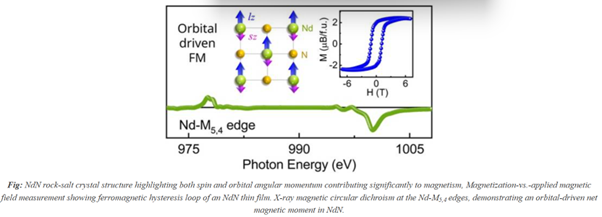
Context: Scientists led by Jawaharlal Nehru Centre for Advanced Scientific Research (JNCASR) discovered a new form of magnetism in neodymium nitride (NdN), opening pathways for advanced quantum and spintronic technologies.
About Rare-Earth Magnetism:
-
- Rare-earth materials are critical for high-performance magnets
• Widely used in EVs, smartphones, wind turbines and defence systems
• Conventional ferromagnetism is driven mainly by electron spin
• Neodymium-based magnets are among the strongest permanent magnets
• Emerging field: orbitronics aims to use orbital motion of electrons
- Rare-earth materials are critical for high-performance magnets
Key Findings:
New Type of Magnetism
-
- NdN thin films show ferromagnetism driven by orbital angular momentum
- Marks departure from traditional spin-driven magnetism
- Demonstrated for the first time in single-crystalline NdN
Scientific Breakthrough
-
- Reveals significant role of electron orbital motion
- Shows both spin and orbital contributions to magnetism
- Represents a paradigm shift in magnetic materials science
Techniques Used
-
- Advanced thin-film growth and characterisation
- Electronic structure analysis
- X-ray magnetic circular dichroism
- Study of crystal symmetry and electronic hybridisation
Institutional Collaboration
-
- Led by JNCASR (DST autonomous institute)
- Collaboration with IISER Thiruvananthapuram and RRCAT Indore
- International partners: DESY (Germany) and ALBA (Spain)
- Published in ACS Nano
Technological Significance:
Orbitronics Applications
-
- Enables control of orbital degrees of freedom
- May complement or surpass spintronics
- Basis for next-generation quantum materials
Quantum and Spintronic Devices
-
- Potential for faster information processing
- More energy-efficient magnetic memory
- Advanced quantum computing components
Materials Design
-
- Framework for tuning spin and orbital moments
- Helps design high-anisotropy magnetic materials
- Supports miniaturisation of devices
Strategic Importance for India:
-
- India holds about 8 percent of global rare-earth reserves
• Strengthens indigenous capability in advanced materials
• Supports clean energy and defence manufacturing
• Reduces dependence on imported critical minerals
• Positions India in emerging quantum technology race
- India holds about 8 percent of global rare-earth reserves
Conclusion:
The discovery of orbital-driven magnetism in NdN marks a major advance in materials science and could accelerate the development of ultra-efficient quantum and spintronic technologies.
Topic 7: National Water Awards – Celebrating India’s Champions of Conservation
GS Paper: GS Paper III – Environment and Water Resources | GS Paper II – Government Initiatives
Context:The 6th National Water Awards (for 2024) were conferred on 18 November 2025 to recognise outstanding contributions in water conservation and management. The event also included the first Jal Sanchay Jan Bhagidari (JSJB) Awards.
About National Water Awards (NWA):
-
- Instituted in 2018 by the Ministry of Jal Shakti
• Recognises individuals, organisations and states for excellence in water conservation
• Aims to promote public awareness and behavioural change in water use
• Encourages community participation and innovative water management practices
• Envisions a “Jal Samridh Bharat” (water-secure India)
- Instituted in 2018 by the Ministry of Jal Shakti
Key Highlights of the 6th National Water Awards:
| Scale of Participation | Top Performing States (NWA) | Purpose and Approach |
|---|---|---|
| • 751 applications received nationwide • 46 winners (including joint awardees) selected • Awards given across 10 categories • Reflects growing national engagement in water conservation | • Rank 1: Maharashtra • Rank 2: Gujarat • Rank 3: Haryana | • Recognises innovation and leadership in water management • Promotes scalable and replicable models • Encourages cross-learning among stakeholders • Strengthens Jan Bhagidari in water governance |
Jal Sanchay Jan Bhagidari (JSJB) Awards 2025:
-
- Launched in 2024 under Jal Shakti Abhiyan: Catch the Rain
- Focuses on community-driven water conservation
- 100 contributors recognised across sectors
- Promotes rainwater harvesting and groundwater recharge
- Around 35 lakh groundwater recharge structures created under JSJB
Best Performing State/UT (JSJB):
-
- Rank 1: Telangana
- Rank 2: Chhattisgarh
- Rank 3: Rajasthan
Major Government Initiatives Strengthening Water Security:
Jal Shakti Abhiyan: Catch the Rain
-
- Nationwide campaign launched in 2021
- Slogan: “Catch the Rain, Where it Falls, When it Falls”
- Focus on rainwater harvesting, desilting, afforestation and check dams
Atal Bhujal Yojana (2019)
-
- Community-led groundwater management programme
- Covers 8,203 water-stressed Gram Panchayats in 7 states
- About 81,000 conservation structures created or renovated
- Around 9 lakh hectares under efficient water-use practices
Pradhan Mantri Krishi Sinchayee Yojana
-
- Vision: Har Khet Ko Pani and More Crop Per Drop
- Promotes micro-irrigation and irrigation expansion
- Improves agricultural water-use efficiency
AMRUT 2.0
-
- Aims to make cities water secure and self-reliant
- Universal tap water in statutory towns
- 3,568 water-supply projects worth over ₹1.14 lakh crore approved
- 181 lakh new tap connections sanctioned
Jal Jeevan Mission
-
- Launched in 2019 for rural tap water supply
- 12.50 crore rural households provided tap connections
- Promotes greywater management and recharge measures
Strategic Significance:
-
- Encourages a whole-of-society approach to water conservation
• Promotes best practices and scalable models
• Strengthens groundwater recharge and demand management
• Supports climate resilience and sustainable development
• Reinforces cooperative federalism in water governance
• Builds long-term water security for India
- Encourages a whole-of-society approach to water conservation
Conclusion:
The National Water Awards have evolved into a powerful instrument for mainstreaming water conservation in governance and society. By recognising grassroots innovation and collective action, they advance India’s journey towards a resilient and water-secure future.
Spread the Word