
Indian Polity
Good Governance Day:
-
- Observed every year on 25 December to mark the birth anniversary of former Prime Minister Atal Bihari Vajpayee.
- Objective: To promote accountability, transparency, citizen-centric governance, and efficient public service delivery.
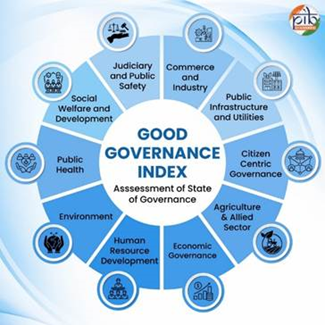
- Good Governance Index (GGI):
- Developed by the Department of Administrative Reforms and Public Grievances (DARPG).
- Measures governance across States and Union Territories.
- Focuses on 10 sectors with 58 indicators for benchmarking performance.
-
- Framework & implementation:
- States/UTs are classified into groups for fair comparison.
- Helps identify best practices, gaps, and reform areas.
- Activities include workshops, citizen feedback, and district-level programs.
- Significance:
- Encourages evidence-based governance reforms.
- Promotes efficient, accountable, and participatory administration.
- Reinforces Vajpayee’s legacy of inclusive development and leadership.
- Current relevance:
- Helps India track progress on SDGs and public service delivery outcomes.
- Strengthens citizen trust in government institutions.
- Framework & implementation:
(PIB)
Economy
Dutch disease:
-
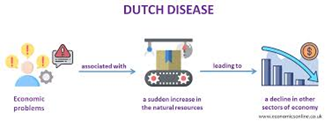
- The Dutch disease refers to a phenomenon where an economic windfall can often translate into negative outcomes in other sectors, such as manufacturing.
- It is an economic phenomenon where a resource boom leads to decline of manufacturing and other tradable sectors.
- Origin of the Term: Coined after the 1959 natural gas discovery in the Netherlands that weakened its industrial base.
- Foreign exchange inflows: Large inflows from resource exports increase demand for domestic currency.
- Currency appreciation: Excess foreign exchange inflows cause real exchange rate appreciation.
- Export competitiveness: Appreciated currency makes manufacturing and agricultural exports costlier globally.
- Sectoral resource shift: Labour and capital move from tradable sectors to resource and non-tradable sectors.
- De-industrialisation: Manufacturing output and employment decline due to reduced profitability.
- Economic vulnerability: Over-dependence on a single resource exposes the economy to global price shocks.
- Non-resource triggers: Foreign aid, remittances and capital inflows can also cause Dutch Disease.
- Policy mitigation: Sovereign wealth funds, fiscal discipline and export diversification reduce risks.
(TH)
Science & Technology
Russia’s Lunar Nuclear Power Plant:
-
- Russia’s state space agency Roscosmos plans to build a power plant on the Moon by around 2036 to support its lunar space programme and a joint Russian Chinese research base.
- Purpose: The plant is intended to provide long term, reliable energy for lunar rovers, scientific instruments, infrastructure, and a future lunar station, enabling sustained lunar operations beyond short missions.
- Involvement of Nuclear Entities: While Roscosmos did not explicitly call it “nuclear”, the project involves Rosatom (Russia’s nuclear corporation) and the Kurchatov Institute, indicating use of nuclear technology for power generation.
- Collaborative framework: The effort is linked to the International Lunar Research Station (ILRS), a joint Russia China initiative aimed at establishing a long-term scientific presence on the Moon.
- Global space context: This announcement comes amid renewed space competition where major powers, including the United States and China, are accelerating plans for lunar bases, nuclear power systems, and long duration infrastructure.
- Why Nuclear on the Moon:
- Solar power limitations: Solar panels face challenges during the 14-day lunar night and dust accumulation.
- Nuclear power can provide continuous, high-density energy needed for habitats and scientific stations.
(IE+TH)
LVM3:
-
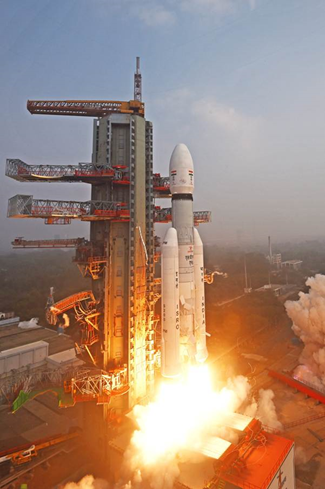
- LVM3, also known as GSLV Mk III, is India’s heaviest and most powerful launch vehicle, developed by ISRO to carry heavier payloads to GTO (Geosynchronous Transfer Orbit) and low Earth orbit.
- Development objective:
- To launch heavier communication satellites (up to 4 tons to GTO).
- To support India’s human spaceflight programme (Gaganyaan).
- To reduce dependency on foreign launch vehicles.
- Structure & stages: Three-stage vehicle:
- Two solid rocket boosters (S200)
- Core liquid stage (L110)
- Cryogenic upper stage (C25)
- Payload Capacity:
- Up to 4 tons to GTO and 10 tons to LEO.
- Largest payload capacity among Indian launch vehicles.
- Significant Missions:
- Chandrayaan-2 (2019) – lunar orbiter launch.
- Gaganyaan – India’s planned human spaceflight.
- HEO and communication satellites launch capabilities.
- Technological highlights:
- Uses indigenous cryogenic engine (CE-20) in upper stage.
- First ISRO launcher capable of heavy-lift missions with high reliability.
- Designed for future deep space missions.
- Strategic & national significance:
- Enhances India’s self-reliance in space.
- Strengthens India’s regional and global space credibility.
- Key component of India’s Human Spaceflight and Lunar programs.
- Current status:
- Fully operational and successfully tested multiple times.
- Integral to Gaganyaan human spaceflight program.
(PIB)
Defence & Security
Indian Coast Guard’s First Pollution Control Vessel – Samudra Pratap:
-
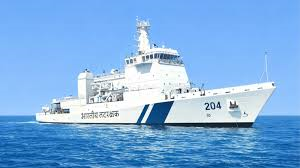
- The Indian Coast Guard (ICG) inducted its first indigenously designed and built Pollution Control Vessel (PCV) named Samudra Pratap on 23 December 2025.
- Constructed by: Built by Goa Shipyard Limited (GSL) under the 02 PCV project with over 60 % indigenous content, reinforcing Atmanirbhar Bharat and Make in India initiatives.
- Significance: It is the largest ship in the ICG fleet, significantly enhancing the Coast Guard’s operational reach and capability for maritime pollution control.
- Dimensions & specs:
- Length: 114.5 m
- Breadth: 16.5 m
- Displacement: 4,170 tonnes
- Key features:
- Advanced onboard technology: Integrated Bridge System, Platform Management System, Automated Power Management System.
- Dynamic Positioning (DP 1): First ICG ship with this capability.
- Equipped with firefighting systems and naval guns (30 mm CRN 91, 12.7 mm remote controlled guns).
- Pollution control capabilities:
- Tools for oil spill detection and recovery, contaminant analysis, and separation of oil from water.
- Advanced detectors like Oil Fingerprinting Machine and Gyro stabilised Chemical Detector.
- Strategic Importance:
- Enhances ICG’s ability to respond to marine pollution incidents within the Exclusive Economic Zone (EEZ) and beyond.
- Strengthens nation’s maritime security and environmental protection efforts.
(PIB)
History, Art & Culture
Keezhadi:
-
- Keezhadi is an archaeological site near Madurai, Tamil Nadu, on the southern banks of the River Vaigai.
- Historical significance:
- Dates back to Sangam era (6th century BCE – 3rd century CE).
- Provides evidence of urban settlements, trade, and culture in ancient Tamil Nadu.
- Major excavations:
- Excavations started by the Archaeological Survey of India (ASI) and Tamil Nadu Archaeology Department.
- Findings include brick structures, streets, pottery, beads, and burial urns.
- Cultural insights:
- Evidence of writing (Tamil-Brahmi script) on pottery.
- Suggests highly organized urban settlement, planning, and craft specialization.
- Indicates trade with Sri Lanka, Southeast Asia, and Roman Empire.
- Economic & technological evidence:
- Presence of pottery kilns, grinding stones, and beads workshops.
- Suggests advanced craft and trade networks.
- Significance in Sangam Studies:
- Confirms continuity of Tamil culture, language, and social organization from Sangam literature.
- Challenges earlier belief that early Tamil civilization was mostly rural.
- Current status:
- Excavation is ongoing, supported by ASI and local authorities.
- Declared as protected site with ongoing efforts to preserve and study findings.
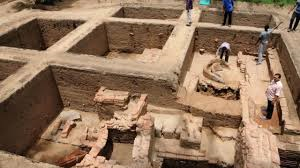
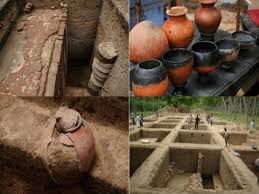
(TH)
Personalities in news
Atal Bihari Vajpayee:
-
- Born on 25 December 1924 in Gwalior, Madhya Pradesh.
- Studied English and Hindi literature at Victoria College, Gwalior.
- Early interest in poetry and politics.
- Political Career:
- Joined Rashtriya Swayamsevak Sangh (RSS) in youth.
- Elected to Lok Sabha in 1957 from Balrampur (U.P.).
- Served as Member of Parliament multiple times, representing BJP later.
- Prime Ministership: 10th Prime Minister of India, served three terms:
- 16 May – 1 June 1996 (13 days)
- 19 March 1998 – 22 October 1999
- 13 October 1999 – 22 May 2004
- Major Achievements:
- Nuclear Tests: Conducted Pokhran-II (1998), establishing India as a nuclear state.
- Economic Reforms: Introduced privatization, infrastructure development, Golden Quadrilateral project.
- Foreign Policy: Improved relations with Pakistan (Lahore Summit), China, and promoted Look East Policy.
- Peace & Governance: Advocated good governance, inclusive development, and national integration.
- Poet & Orator: Known for literary contributions in Hindi poetry and exceptional oratory skills.
- Awards & Honors:
- Bharat Ratna (2015) – India’s highest civilian award.
- Celebrated for statesmanship, vision, and political moderation.
- Death & Legacy:
- Passed away on 16 August 2018 in New Delhi.
- Good Governance Day (25 Dec) commemorates his birth anniversary.
- Remembered as a visionary leader balancing development, diplomacy, and democracy.
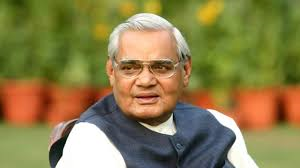
(PIB+TH)
Swami Shraddhanand:
-
- Born in 1867 in Talwan, Punjab, as Munshi Ram.
- Early education in Sanskrit and traditional Indian learning.
- Philosophy & ideology:
- Prominent Arya Samaj leader and social reformer.
- Advocated Vedic values, education, and social upliftment.
- Strongly opposed caste discrimination and superstitions.
- Contributions:
1. Education:
-
-
-
- Founded Gurukul Kangri University (1902) in Haridwar to revive Vedic education system.
- Promoted nationalist education alongside traditional learning.
-
-
2. Social Reform:
-
-
-
- Actively campaigned against child marriage, untouchability, and caste barriers.
- Encouraged women’s education and empowerment.
-
-
3. Nationalism:
-
-
-
- Worked for Indian independence by spreading awareness and promoting national unity.
- Played a role in propagating Arya Samaj values in nationalist movements.
-
- Death: Assassinated on 23 December 1926 by a religious fanatic opposed to his social and reformist ideas.
- Legacy:
- Gurukul Kangri University continues to be a centre of Vedic education and Indian philosophy.
- Remembered as a social reformer, educationist, and nationalist.
- Inspired educational and reformist movements in northern India.
-
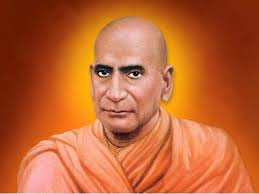
(PIB)
Miscellaneous
Sanskrit Subhashitam emphasising the importance of hard work:
-
- The Prime Minister, Shri Narendra Modi, shared a Sanskrit Subhashitam-
“यस्य कृत्यं न विघ्नन्ति शीतमुष्णं भयं रतिः।
समृद्धिरसमृद्धिर्वा स वै पण्डित उच्यते।।”
-
- The Subhashitam conveys that only the one whose work is not hampered by cold or heat, fear or affection, wealth or poverty is called a knowledgeable person.
(PIB)
Spread the Word