INDIAN POLITY & GOVERNANCE
Union Home Minister Chairs 31st Southern Zonal Council Meeting in Mamallapuram to Foster Cooperative Federalism:
Context: Union Home Minister Amit Shah chaired the 31st meeting of the Southern Zonal Council near Mamallapuram, Tamil Nadu, with Tamil Nadu Chief Minister C. Joseph Vijay serving as Vice-Chairman, deliberating on inter-state river water disputes, power transmission tariffs, coastal security, and fast-track special courts.
-
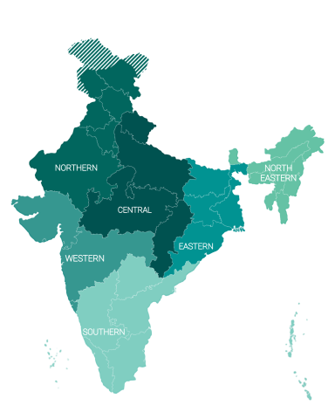
- Council Session & Host State: Convened near Mamallapuram (Chennai), the 31st Southern Zonal Council brought together Chief Ministers, Ministers, and administrators of Andhra Pradesh, Karnataka, Kerala, Tamil Nadu, Telangana, and the Union Territories of Puducherry, Lakshadweep, and Andaman & Nicobar Islands.
- Statutory Origin under States Reorganisation Act, 1956: Unlike constitutional bodies like the Inter-State Council (Article 263), Zonal Councils are statutory bodies established under Part III of the States Reorganisation Act, 1956, divided into five zones (Northern, Central, Eastern, Western, and Southern).
- Advisory Mandate & Federal Dispute Resolution: Functions as an advisory consensus-building forum to deliberate on inter-state river water sharing (Cauvery and Krishna basins), uniform state mining policies, and inter-state power grid connectivity.
- Institutional Structure: The Union Home Minister serves as the permanent Chairman of all five Zonal Councils, while the Chief Ministers of member States act as Vice-Chairman on a one-year rotational basis.
- Inter-State Council Secretariat (ISCS): Administrative and logistical support is anchored by the Inter-State Council Secretariat under the Ministry of Home Affairs.
- Focus on Fast-Track Special Courts (FTSCs): Urged member states to accelerate the disposal of cases related to rape and the Protection of Children from Sexual Offences (POCSO) Act through dedicated Fast-Track Special Courts.
- Coastal Security Synergy: Coordinated intelligence-led joint coastal patrolling between State Marine Police and the Indian Coast Guard to secure the 3,500-km southern coastline.
- Cooperative & Competitive Federalism: Reconciles regional aspirations with national economic priorities in line with the Sarkaria and Punchhi Commission recommendations on federal governance.
- Democratic Consensus Building: Demonstrates the vital efficacy of institutionalized inter-state mechanisms in settling administrative friction without prolonged judicial litigation.
(TH / IE / PIB)
SOCIETY & SOCIAL JUSTICE
Odisha Constitutes High-Level Panel to Audit Tribal Village Relocations from Satkosia Tiger Habitat under FRA:
Context: The Odisha government notified a high-level inquiry committee headed by the Revenue and Disaster Management Secretary to examine allegations of forced displacement of tribal and traditional forest dwellers from the core habitat of the Satkosia Tiger Reserve (STR).
-
- Satkosia Tiger Reserve: Satkosia Tiger Reserve is located in the heartland of Odisha and spread over four districts viz. Angul, Cuttack, Boudh and Nayagarh. The terrain is hilly with moderate to steep slopes and narrow valleys. The General elevation varies from 37 m. to 932 m. The river Mahanadi flows through the valleys in the mid of the Reserve, making the Satkosia Gorge.
- Inquiry Panel Notification Peg: The Odisha government established a high-level administrative committee to review the legality and voluntariness of village relocations from the core area of the Satkosia Tiger Reserve, responding to allegations of manufactured consent.
- Statutory Compliance under Forest Rights Act, 2006: Investigates adherence to the Scheduled Tribes and Other Traditional Forest Dwellers (Recognition of Forest Rights) Act, 2006 (FRA), which mandates that no forest dweller can be evicted until all individual and community forest rights are formally recognized and settled.
- Mandatory Gram Sabha Prior Informed Consent: Section 4(2) of the FRA requires explicit, written Free, Prior, and Informed Consent (FPIC) of the concerned Gram Sabhas before any relocation package or resettlement plan from a protected area is executed for Critical Wildlife Habitats (CWHs).
- Wild Life (Protection) Act, 1972 Safeguards: Cross-examines provisions under Section 38V of the Wild Life (Protection) Act, 1972, requiring scientific proof that human presence causes irreversible damage to tiger populations and that co-existence is ecologically impossible in Critical Tiger Habitats (CTH).
- National Tiger Conservation Authority (NTCA) Guidelines: Evaluates compliance with NTCA’s statutory resettlement guidelines offering families a choice between a direct cash compensation of ₹15 lakh per family or comprehensive land-based rehabilitation with agricultural infrastructure.
- Constitutional Safeguards for Tribal Communities: Protects fundamental and directive principles under Article 19(1)(e) (residence rights), Article 21 (livelihood with dignity), Article 46 (promotion of educational and economic interests of STs), and Fifth Schedule tribal governance.
- Pastoral and Forest-Based Livelihood Protection: Seeks to prevent landlessness, loss of non-timber forest produce (NTFP) access, and socio-cultural alienation of vulnerable indigenous forest-dwelling communities.
- Nodal Departments: Revenue and Disaster Management Department, ST & SC Development Department, and Forest, Environment & Climate Change Department, Government of Odisha.
- Social Justice & Ecological Equilibrium: Establishes a critical balance between biodiversity and apex predator conservation and the constitutional human rights of indigenous tribal populations.
(TH / DTE)
INTERNATIONAL DEVELOPMENTS
India and Japan Formalize Landmark Maritime Security Cooperation Arrangement in New Delhi:
Context: Defence Minister Rajnath Singh and his Japanese counterpart Shinjiro Koizumi signed a Memorandum of Arrangement (MoA) on Maritime Security Cooperation in New Delhi, expanding operational interoperability and logistics sharing across the Indo-Pacific.
-
- Bilateral Defence Signing Peg: Indian and Japanese Defence Ministers signed the high-level Memorandum of Arrangement (MoA) on Maritime Security Cooperation following bilateral delegation-level talks at the Manekshaw Centre in New Delhi.
- Operational Interoperability & Domain Awareness: The agreement establishes real-time maritime domain awareness (MDA) sharing between the Information Fusion Centre – Indian Ocean Region (IFC-IOR, Gurugram) and Japan’s Maritime Information Fusion Centre.
- Mutual Logistics via ACSA: Operationalizes the bilateral Acquisition and Cross-Servicing Agreement (ACSA) signed in 2020, facilitating reciprocal provision of supplies, fuel, maintenance, and port access between the Indian Navy and the Japan Maritime Self-Defense Force (JMSDF).
- Joint Military Exercises Framework: Enhances tactical complexity in regular bilateral exercises (JIMEX, Dharma Guardian, Shinyuu Maitri) and multilateral Quad exercises (MALABAR).
- Indo-Pacific Maritime Domain Awareness (IPMDA) Initiative: Advances the Quad’s IPMDA initiative using commercial satellite data to track illegal, unreported, and unregulated (IUU) fishing and dark-shipping across critical Sea Lines of Communication (SLOCs).
- Freedom of Navigation under UNCLOS 1982: Reaffirms mutual commitment to an open, inclusive, and rules-based Indo-Pacific, ensuring unimpeded sea navigation through the Malacca Strait, South China Sea, and Indian Ocean rim.
- Defence Industrial & Technology Cooperation: Explores joint research in underwater acoustic sensors, unmanned maritime vehicles (USVs), and co-production of communication antennas under the DTTI umbrella.
- Nodal Ministries: Ministry of Defence (MoD) and Ministry of External Affairs (MEA) in coordination with Japan’s Ministry of Defense.
- Geostrategic Deterrence Value: Consolidates the India-Japan Special Strategic and Global Partnership, reinforcing maritime deterrence against regional coercive maneuvers in the Indo-Pacific.
(TH / PIB / IE)
ECONOMY
India-Singapore Ministerial Roundtable Advances Cross-Border Financial Linkages and Green Capital Flows:
Context: Deliberations at the 4th India-Singapore Ministerial Roundtable (ISMR) and Business Roundtable focused on operationalizing real-time cross-border capital settlements, expanding bilateral trade towards $50 billion, and mobilizing sovereign green finance.
-
- High-Level Economic Deliberations: Co-chaired by Union Finance Minister Nirmala Sitharaman and Commerce Minister Piyush Goyal in Singapore, the roundtable brought together 70 top business leaders to deepen trade, investment, and FinTech architecture.
- FDI Anchor & Capital Inflows: Singapore continues as India’s leading source of Foreign Direct Investment (FDI), contributing over 25% of cumulative equity inflows ($160+ billion since 2000), particularly in digital services, infrastructure, and real estate investment trusts (REITs).
- Expansion of UPI-PayNow Interoperability: Reviewed the scalability of the live bilateral digital payments linkage between NPCI’s UPI and Singapore’s PayNow, enabling instant cross-border retail remittances at a fraction of conventional SWIFT bank charges.
- Integration with Project Nexus (BIS): Positions the India-Singapore payment bridge as the foundational blueprint for the Bank for International Settlements’ (BIS) Project Nexus, which aims to interlink real-time payment systems across ASEAN and South Asia.
- Green Hydrogen & Sustainable Finance: Finalized frameworks for Singaporean sovereign wealth funds (GIC, Temasek) to finance utility-scale green hydrogen hubs and offshore wind projects in Gujarat and Tamil Nadu.
- Incentivizing GIFT-IFSC Linkages: Facilitated cross-listing and dual-trading arrangements between the Singapore Exchange (SGX) and the India International Exchange (India INX) at GIFT City, Gandhinagar.
- Nodal Financial Regulators: Reserve Bank of India (RBI) and Monetary Authority of Singapore (MAS) in coordination with the Department of Economic Affairs (DEA), Ministry of Finance.
- Macroeconomic Stability Significance: Diversifies foreign portfolio and direct investment avenues, cushions India’s capital account balance, and accelerates financial globalization of the Indian Rupee (INR).
(LM / PIB / BS)
GEOGRAPHY
High-Altitude Rainfall Triggers Landslide and Ecological Inundation in Western Ghats’ Kannur-Wayanad Corridor:
Context: Heavy monsoon rainstorms, in the sensitive Western Ghats foothills (Maloor and Kottiyoor forest ranges along the Kerala-Karnataka border) prompted disaster mitigation and geomorphological evaluations regarding slope stability and human-wildlife habitat fragmentation.
-
- Orographic Rainfall Inundation: The southwest monsoon winds encounter the Western Ghats escarpment, producing intense localized orographic precipitation across the Windward slopes of the Malabar coast.
- Geomorphology of the Western Ghats Escarpment: The region features steep slopes, deeply weathered lateritic soils, and Precambrian crystalline bedrock (charnockites and gneisses) that become highly prone to slope failure and debris flows when saturated.
- Pore-Water Pressure & Soil Piping: Infiltration of torrential rainwater into loose topsoil elevates pore-water pressure along the soil-bedrock interface, triggering gravitational mass wasting, slope failure, and flash flooding in local river channels.
- Ecological Fragility of Kottiyoor Wildlife Corridor: The Kottiyoor-Brahmagiri forest belt forms a critical ecological corridor connecting the Nilgiri Biosphere Reserve with the Pushpagiri Wildlife Sanctuary in Karnataka, facilitating seasonal elephant and carnivore migration.
- Habitat Fragmentation & Land-Use Pressures: Agricultural encroachment on steep slopes (rubber and monoculture plantations) destroys natural deep-rooted evergreen forest cover, exacerbating soil erosion and human-wildlife encounters.
- Gadgil vs Kasturirangan High-Level Panels: Highlights the pressing urgency of notifying Western Ghats Ecologically Sensitive Areas (ESAs) under the Environment (Protection) Act, 1986, as recommended by the Madhav Gadgil and K. Kasturirangan committees.
- Landslide Susceptibility Zonation: Monitored by the Geological Survey of India (GSI) and the National Centre for Earth Science Studies (NCESS) using remote sensing satellite landslide hazard zonation maps.
- Nodal Disaster Management Bodies: Kerala State Disaster Management Authority (KSDMA) under the National Disaster Management Act, 2005.
- Agro-Ecological Conservation Value: Emphasizes the need for bio-engineering slope stabilization (vetiver grass terraces), agro-forestry buffers, and strict bans on slope quarrying in critical Western Ghats catchments.
(TH / DTE)
SCIENCE & TECHNOLOGY
Breakthrough in Personalized mRNA Neoantigen Vaccines Demonstrates Significant Reduction in Cancer Recurrence:
Context: Landmark clinical trials demonstrated that personalized mRNA cancer vaccines tailored to patients’ unique tumor genetic profiles cut the risk of skin cancer (melanoma) recurrence by nearly half when combined with immune checkpoint inhibitors.
-
- Clinical Trial Breakthrough Peg: Advanced Phase-III trials established that individualized neoantigen mRNA therapy significantly prolongs recurrence-free survival in resected high-risk melanoma patients, heralding a paradigm shift from broad chemotherapy to precision immunotherapy.
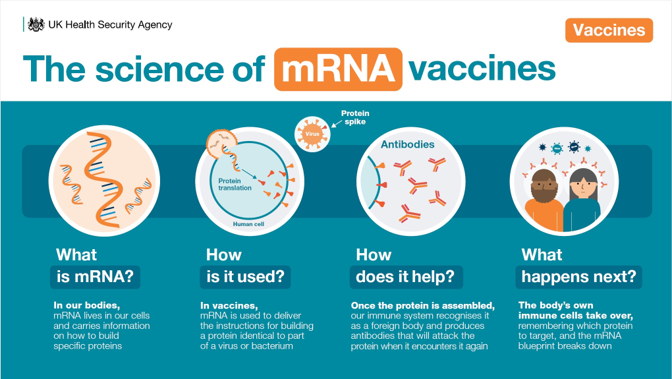
- Targeting Somatic Neoantigens: Unlike infectious disease vaccines that introduce viral antigens, personalized cancer vaccines identify patient-specific tumor mutations (neoantigens) that arise exclusively in rogue cancer cells.
- Next-Generation DNA/RNA Sequencing Pipeline: High-throughput whole-exome sequencing of biopsied tumor tissue and healthy blood cells is performed to identify non-synonymous somatic mutations; AI algorithms predict which mutated peptides will bind most strongly to patient MHC molecules.
- Lipid Nanoparticle (LNP) Delivery Vehicle: Synthetic mRNA encoding up to 34 neoantigen peptides is encapsulated in protective lipid nanoparticles (LNPs) to facilitate cellular uptake and prevent enzymatic degradation.
- Mechanism of T-Cell Activation: Upon intramuscular injection, host dendritic cells (antigen-presenting cells) translate the synthetic mRNA into neoantigen proteins, displaying them on MHC-I and MHC-II molecules to prime cytotoxic CD8+ and helper CD4+ T-lymphocytes.
- Synergy with Immune Checkpoint Inhibitors: Administered in combination with anti-PD-1 monoclonal antibodies (e.g., pembrolizumab), which block the PD-1/PD-L1 inhibitory pathway and prevent cancer cells from deactivating attacking T-cells.
- Platform Versatility for Solid Tumours: The mRNA platform is being rapidly expanded to target pancreatic, colorectal, non-small cell lung (NSCLC), and renal cell cancers.
- Nodal Research Oversight: Evaluated in India under the Department of Biotechnology (DBT), Indian Council of Medical Research (ICMR), and Central Drugs Standard Control Organisation (CDSCO).
- Biomedical Revolution Impact: Establishes a scalable blueprint for personalized medicine, transforming previously incurable somatic malignancies into treatable, immune-controlled conditions.
(IE / TH)
INTERNAL SECURITY
Multi-Tier Coastal Security Architecture and Maritime Domain Surveillance Reviewed at Southern Zonal Council:
Context: During the 31st Southern Zonal Council meeting in Mamallapuram, the Union Home Ministry and southern littoral states reviewed the operationalization of the integrated multi-tier coastal security grid, electronic vessel tracking, and joint coastal police stations.
-
- Coastal Security Review Peg: Union Home Minister Amit Shah conducted a strategic review of the coastal defense infrastructure of peninsular India, directing enhanced operational coordination between coastal state police, the Indian Coast Guard (ICG), and the Indian Navy.
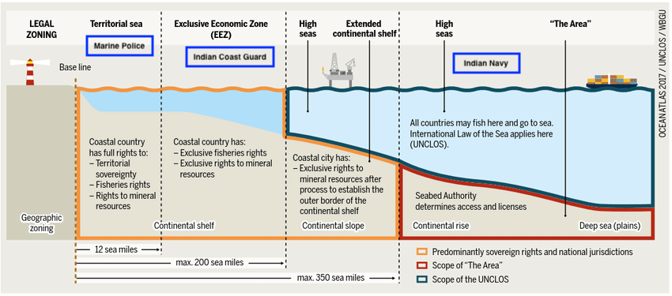
- Three-Tier Coastal Defense Architecture: Governed by the national maritime security doctrine established post-26/11: State Marine Police patrol shallow waters up to 5 nautical miles (NM), the Indian Coast Guard guards territorial waters and the Contiguous Zone (5 to 12 NM / 24 NM), and the Indian Navy secures the Exclusive Economic Zone (EEZ up to 200 NM) and high seas.
- Coastal Surveillance Network (CSN) Phase-II: Deployment of chain-of-radar stations, electro-optic cameras, and high-frequency transponders along the 7,516-km coastline, integrating feeds into the National Command Control Communication and Intelligence (NC3I) Network.
- Mandatory AIS / Transponders for Fishing Vessels: Rollout of satellite-based Automatic Identification System (AIS) and distress alert transmitters (DATs) on all mechanized and traditional fishing boats below 20 metres in length to eliminate unidentified dark-vessel radar signatures.
- Biometric Smart Cards for Fisherfolk: Verification of coastal fishermen through digitized biometric identity cards issued under the National Population Register (NPR) to prevent cross-border infiltration and maritime impersonation.
- Sagar Prahari Bal & Community Policing: Engagement of local coastal fishing communities as the ‘eyes and ears’ of coastal surveillance through the Sagar Mitra and Gram Rakshak Dal schemes.
- Statutory Legal Enforcement: Enforces the Territorial Waters, Continental Shelf, Exclusive Economic Zone and other Maritime Zones Act, 1976 and the Maritime Zones of India (Regulation of Fishing by Foreign Vessels) Act, 1981.
- Nodal Authority: National Committee for Strengthening Maritime and Coastal Security (NCSMCS) headed by the Cabinet Secretary, with operational coordination via the Indian Navy and Ministry of Home Affairs (MHA).
- National Security Imperative: Prevents asymmetric sea-borne infiltration, maritime narco-smuggling, and attacks on critical coastal energy and port infrastructure.
(TH / PIB / IE)
MISCELLANEOUS
National Observance of Sadbhavana Diwas Commemorates Democratic Modernization and Institutional Reforms:
Context: The nation observed Sadbhavana Diwas (Harmony Day) on the 82nd birth anniversary of former Prime Minister Rajiv Gandhi, reviewing the transformative constitutional and technological reforms initiated during his tenure that modernized Indian democracy.
-
- National Harmony Observance Peg: Observed annually on August 20, Sadbhavana Diwas promotes national integration, communal harmony, peace, and non-violence among citizens of all religions and languages.
- 61st Constitutional Amendment Act, 1988: Enacted the historic amendment to Article 326 of the Constitution, lowering the minimum voting age for Indian citizens from 21 years to 18 years, enfranchising millions of youth into the democratic process.
- 52nd Constitutional Amendment Act, 1985 (Tenth Schedule): Introduced the Anti-Defection Law under the Tenth Schedule to curb unprincipled political defections (‘Aaya Ram Gaya Ram’ culture) and stabilize legislative governance.
- National Policy on Education (NPE 1986): Formulated the landmark NPE 1986, establishing the nationwide network of Jawaharlal Navodaya Vidyalayas (JNVs) to provide free, residential, high-quality modern education to talented rural children.
- Center for Development of Telematics (C-DOT): Established in 1984 as an autonomous telecom R&D center under the Ministry of Communications, indigenizing rural automatic exchange (RAX) electronic switching systems and triggering India’s telecom revolution.
- Panchayati Raj & Grassroots Decentralization: Conceptualized the 64th and 65th Constitutional Amendment Bills (the precursors to the historic 73rd and 74th Amendments of 1992) to devolve political and financial powers to village panchayats and municipal bodies.
- Peace Accords for Conflict Resolution: Spearheaded historic domestic peace settlements, including the Assam Accord (1985), Punjab Accord (1985), and Mizo Accord (1986), restoring democratic normalcy in frontier regions.
- Nodal Ministry: Ministry of Culture and Ministry of Youth Affairs and Sports.
- Civilizational & Democratic Legacy: Reinforces the constitutional values of youth empowerment, scientific temper (Article 51A(h)), and national harmony across diverse cultural landscapes.
(TH / PIB)
Spread the Word