Indian Polity & Governance
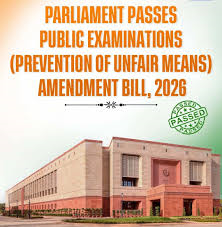
Passage of Public Examinations (Prevention of Unfair Means) Amendment Bill, 2026:
Context: Parliament passed the Public Examinations (Prevention of Unfair Means) Amendment Bill, 2026, aimed at strengthening the examination system, curtailing paper leaks, and ensuring transparency across central recruitment bodies.
-
- Target Examinations: Applies strictly to public examinations conducted by central authorities including UPSC, SSC, RRBs, IBPS, and testing bodies like NTA.
- Cognizable & Non-Bailable Offence: Unfair means such as paper leaks, tampering with computer networks, and fake websites are categorized as cognizable, non-bailable, and non-compoundable offences.
- Protection to Candidates: The legislation targets organized syndicates, service providers, and complicit officials; genuine student candidates are kept outside the purview of harsh criminal penalties.
- Organized Crime Definition: Substantially penalizes organized examination rackets with stringent jail terms and high monetary fines to act as a deterrence.
- UPSC Constitutional Status: Article 315 to 323 (Part XIV) deals with Public Service Commissions; UPSC is an independent constitutional body established under Article 315.
- Appointment & Tenure: UPSC Chairman and members are appointed by the President of India for a term of 6 years or until attaining the age of 65 years (Article 316).
- Removal of Members: Article 317 outlines that UPSC members can be removed by the President only on grounds of misbehavior after a reference and inquiry by the Supreme Court.
- Functional Scope: UPSC conducts examinations for appointments to All India Services, Central Services, and Public Services, and is consulted on disciplinary matters regarding civil servants (Article 320).
- National Testing Agency (NTA): Established in 2017 as an autonomous premier testing organization registered under the Societies Registration Act, 1860.
(TH)
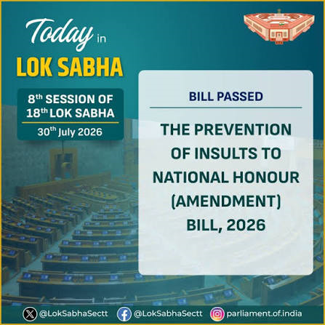
The Prevention of Insults to National Honour (Amendment) Bill, 2026:
Context: The Lok Sabha passed the Prevention of Insults to National Honour (Amendment) Bill, 2026, to expand statutory protection and penalties regarding disrespect shown to national symbols.
-
- Parent Act: The original Act was enacted in 1971 to prohibit disrespect to the National Flag, Constitution, National Anthem, and Map of India.
- Key Amendment: Expands statutory protections and explicit penal provisions regarding intentional disrespect toward national symbols.
- Fundamental Duty Connection: Article 51A(a) states that it shall be the duty of every citizen of India to abide by the Constitution and respect its ideals and institutions, the National Flag, and the National Anthem.
- Non-Enforceability: Fundamental Duties added by the 42nd Constitutional Amendment Act, 1976 (Swaran Singh Committee) are legally non-enforceable unless backed by specific parliamentary statutes like this 1971 Act.
- Flag Code of India, 2002: Executive instructions (not a law) governing the display of the National Flag. Amended in 2022 to allow display day and night and usage of machine-made polyester flags.
- National Anthem Guidelines: The Supreme Court in Bijoe Emmanuel vs State of Kerala (1986) ruled that standing up respectfully during the National Anthem without singing does not constitute disrespect.
- National Song (Vande Mataram): Written by Bankim Chandra Chattopadhyay in his novel Anandamath (1882); adopted as the National Song in 1950 with status equal to the National Anthem.
- Anandamath & Sanyasi Rebellion: Set against the backdrop of the Sanyasi Rebellion in Bengal during the late 18th century.
- Penal Provisions: Disrespecting symbols carries imprisonment up to 3 years, or a fine, or both under the parent statute.
(IE/TH)
Geography
Flash Flood Warnings & Hydrological Vulnerability in Arunachal Pradesh:
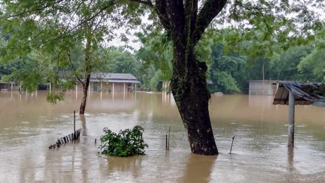
Context: The India Meteorological Department (IMD) issued an orange alert for heavy to very heavy rainfall in Arunachal Pradesh, triggering flash flood alerts across 9 districts (including Tawang, West Kameng, and Anjaw).
-
- Affected Rivers: Upper stretches of the Siang (Brahmaputra in Tibet as Yarlung Zangbo), Subansiri, Lohit, and Dibang systems.
- Flash Floods Definition: Rapid inundation of low-lying areas occurring within 6 hours of heavy rainfall, dam failure, or cloudburst.
- Soil Saturation Factor: Fully saturated mountain soils lose shear strength, leading to sudden debris flows, landslides, and river basin swelling.
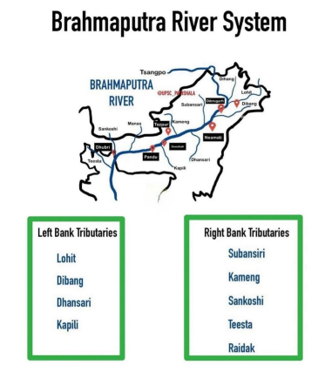
- Brahmaputra River System:
-
-
- Originates from Angsi Glacier (Chemayungdung) near Mount Kailash.
- Enters India at Namcha Barwa gorge taking a sharp syntaxial bend into Arunachal Pradesh (called Siang/Dihang).
-
-
- Major Left Bank Tributaries: Dibang, Lohit, Dhansiri.
- Major Right Bank Tributaries: Subansiri, Kameng, Manas, Sankosh, Teesta.
- Glacial Lake Outburst Floods (GLOFs): High vulnerability in the Eastern Himalayas due to retreating glaciers forming proglacial lakes.
- IMD Rainfall Warnings:
-
-
- Green: No warning.
- Yellow: Watch and stay updated.
- Orange: Be prepared (heavy rain).
- Red: Take action (extremely heavy rain).
-
-
- Central Water Commission (CWC): Premier technical organization in India for flood forecasting and water resource development.
(IE)
Environment & Ecology
Installed Renewable Energy & Wind Power Update:
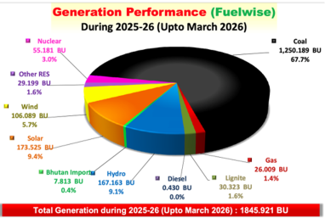
Context: Ministry of New and Renewable Energy (MNRE) released official capacity figures, highlighting that India’s total renewable energy capacity reached 288.58 GW, with Wind Power capacity crossing 57,443 MW.

-
- Panchamrit Targets (COP26 Glasgow):
-
-
- Reach 500 GW of non-fossil energy capacity by 2030.
- Meet 50% of energy requirements from renewable energy by 2030.
- Reduce total projected carbon emissions by 1 billion tonnes from now till 2030.
- Reduce carbon intensity of economy by 45% by 2030.
- Achieve Net Zero emissions by 2070.
-
-
- Global Standing: India ranks 4th globally in installed renewable energy capacity, as well as 4th in Wind Power and 4th in Solar Power.
- Offshore Wind Energy Policy: National Offshore Wind Energy Policy (2015) identifies high potential off the coasts of Gujarat and Tamil Nadu.
- National Institute of Wind Energy (NIWE): Autonomous body under MNRE located in Chennai, responsible for wind resource assessment and certification.
- ALMM (Approved List of Models and Manufacturers): Managed by MNRE to boost domestic solar module manufacturing and reduce import dependency.
- National Green Hydrogen Mission: Aims to produce 5 MMT (Million Metric Tonnes) of Green Hydrogen per annum by 2030 with associated RE capacity addition.
- Grid Integration Challenge: High variable renewable energy (VRE) requires Battery Energy Storage Systems (BESS) and Pumped Storage Projects (PSP) for grid stability.
- PM-KUSUM Scheme: Focuses on solarization of agricultural pumps and setting up small solar power plants on barren lands.
- PLI Scheme for High-Efficiency Solar PV Modules: Incentivizes integrated manufacturing from polysilicon to solar modules.
(PIB)
Supreme Court Ban on Retrospective Environmental Clearances:
Context: The Supreme Court quashed an Office Memorandum (OM) issued by the Union Ministry of Environment, Forest and Climate Change (MoEFCC) that allowed ex-post facto (retrospective) environmental clearances for projects that began operations without prior clearance.
-
- Rule of Law: The SC held that issuing ex-post facto clearances via administrative orders violates the fundamental principles of environmental jurisprudence and the Precautionary Principle.
- EIA Notification, 2006: Issued under Section 3 of the Environment (Protection) Act, 1986 (EPA), making prior Environmental Clearance (EC) mandatory for specified developmental projects.
- Precautionary Principle: A core principle of International Environmental Law (formalized in Principle 15 of the 1992 Rio Declaration) stating that lack of full scientific certainty shall not be used as a reason for postponing cost-effective measures to prevent environmental degradation.
- Polluter Pays Principle: Requires the polluter to bear the financial cost of preventing or remedying environmental damage caused by their actions.
- Types of Projects under EIA: Projects are classified into Category A (evaluated at the central level by the Impact Assessment Agency and EAC) and Category B (evaluated at the state level by SEIAA and SEAC).
- Public Hearing Mechanism: Public consultation is a statutory requirement under the EIA Notification 2006 for Category A and Category B1 projects, allowing local affected communities to voice concerns.
- Role of NGT: The National Green Tribunal (established under NGT Act, 2010) has consistently held that retrospective clearance turns environmental regulation into a mere formality.
- Delegated Legislation Limit: Executive notifications or Office Memoranda cannot override or dilute the parent statute (EPA 1986).
- Impact on Infrastructure: Projects already built without clearance must face legal proceedings and assessment under environmental restitution norms rather than blanket regularization.
(TH/IE)
Science & Technology
25 Years of the Himalayan Chandra Telescope (HCT) at Hanle:
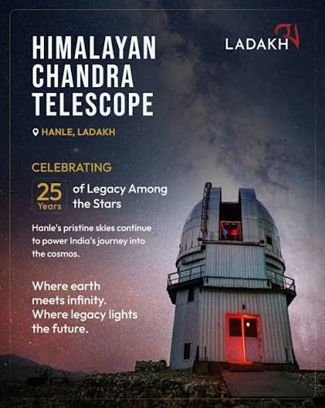
Context: The Indian Institute of Astrophysics (IIA) celebrated 25 years of continuous scientific operation of the 2-metre Himalayan Chandra Telescope (HCT) located at Hanle, Ladakh.
-
- Location & Altitude: Installed at the Indian Astronomical Observatory (IAO) in Hanle, Ladakh, at an altitude of 4,500 metres above sea level.
- Remote Operation: Remotely controlled via a dedicated satellite link from CREST (Centre for Research and Education in Science and Technology), Hosakote near Bengaluru.
- Primary Naming: Named after Nobel laureate Subrahmanyan Chandrasekhar (known for the Chandrasekhar Limit = ).
- Why Hanle? High altitude, ultra-low atmospheric water vapor, cloudless skies, minimal light pollution, and cold desert climate make it ideal for optical and near-infrared astronomy.
- Hanle Dark Sky Reserve: In 2022, India declared Hanle as its first Dark Sky Reserve within the Changthang Wildlife Sanctuary.
- Key Instruments: Equipped with HFOSC (optical spectrograph & camera), uTIRSPEC (near-IR spectrometer), and HESP (high-resolution Echelle spectrograph).
- Scientific Output: Studies stellar evolution, supernovae, active galactic nuclei (AGNs), exoplanets, and near-Earth asteroids.
- Parent Organization: Managed by the Indian Institute of Astrophysics (IIA), an autonomous institute under the Department of Science and Technology (DST).
- Complementary Astronomical Facilities: Includes Major Atmospheric Gamma Ray Imaging Telescope (MACE) at Hanle and Devasthal Optical Telescope (DOT) in Uttarakhand.
(PIB)
Rare-Earth-Free Motors & “Virtual Magnet” Technology:
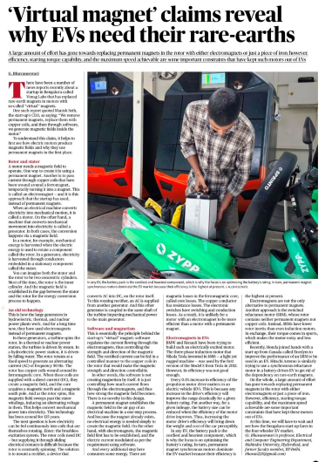
Context: With growing supply chain risks around Critical Rare-Earth Elements (REEs), technological advancements in EV electric motors are shifting toward “virtual magnet” designs that replace permanent magnets with copper coils controlled via software algorithms.
-
- The Problem: Traditional Permanent Magnet Synchronous Motors (PMSMs) rely heavily on rare-earth elements like Neodymium (Nd) and Dysprosium (Dy).
- Virtual Magnet Concept: Uses copper excitation coils in place of physical magnets, dynamically generating magnetic fields via real-time power control software.
- What are Rare Earth Elements (REEs)? A set of 17 chemical elements comprising the 15 lanthanides plus Scandium and Yttrium.
- Categorization: Divided into Light REEs (LREEs) (e.g., Lanthanum, Cerium, Neodymium) and Heavy REEs (HREEs) (e.g., Dysprosium, Terbium, Yttrium).
- Monazite Sands: In India, rare earths are primarily extracted from Monazite sands found along coastal stretches (Kerala, Odisha, Tamil Nadu, Andhra Pradesh).
- Regulatory Status in India: Monazite is a prescribed atomic mineral under the Atomic Energy Act, 1962; processing is restricted to Public Sector Undertakings like IREL (India) Limited.
- Geopolitical Dominance: China controls over 60% of global REE mining and nearly 90% of global REE refining capacity.
- Mines and Minerals (Development and Regulation) Amendment Act, 2023: Removed 6 critical minerals (including Lithium, Beryllium, Titanium, Niobium) from the atomic minerals list, allowing private sector commercial mining.
- Alternative EV Motors: Induction Motors (IM) and Externally Excited Synchronous Motors (EESM) offer magnet-free alternatives.
(TH)
Security
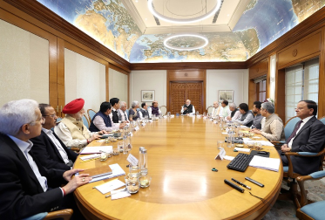
Cabinet Committee on Security (CCS) Meeting on West Asia Conflict:
Context: PM chaired a high-level Cabinet Committee on Security (CCS) meeting to review geopolitical developments in West Asia and evaluate India’s energy and supply chain security.
-
- Composition of CCS: Chaired by the Prime Minister; core members include the Minister of Defence, Minister of Home Affairs, Minister of External Affairs, and Minister of Finance.
- Role of CCS: Highest decision-making body on national security, defense procurement, foreign affairs strategy, and nuclear policy in India.
- Cabinet Committees Status: They are extra-constitutional bodies created under the Transaction of Business Rules, 1961 (framed under Article 77(3) of the Constitution).
- Energy Security Focus: Reviewed diversification of Crude Oil and LPG/LNG sourcing to prevent supply shock-induced inflation.
- Strategic Petroleum Reserves (SPR): Managed by ISPRL (Indian Strategic Petroleum Reserves Limited, a SPV under Ministry of Petroleum). Phase-1 reserves located at Visakhapatnam, Mangaluru, and Padur.
- Chokepoints in West Asia:
-
-
- Strait of Hormuz: Connects Persian Gulf to Gulf of Oman (vital for global crude/LPG shipments).
- Bab-el-Mandeb: Connects Red Sea to Gulf of Aden.
- Suez Canal: Connects Red Sea to Mediterranean Sea.
-
-
- India’s Import Dependence: India imports over 85% of its crude oil requirements, making it sensitive to Middle Eastern instability.
- Fertilizer Supply Chains: West Asia is a major exporter of Rock Phosphate, Phosphoric Acid, Urea, and Potash to India.
- Piped Natural Gas (PNG) Push: Domestic expansion of PNG/CNG infrastructure mitigates LPG import vulnerabilities.
(PIB)
History, Art & Culture
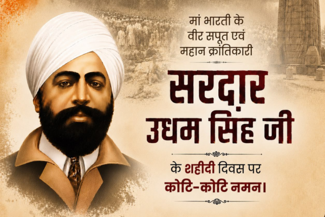
Martyrdom Day of Shaheed Udham Singh (31st July):
Context: PM paid national tribute to revolutionary freedom fighter Shaheed Udham Singh on his Martyrdom Day (31st July).
-
- Historical Significance: Shaheed Udham Singh assassinated Michael O’Dwyer on 13 March 1940 at Caxton Hall, London.
- Context of Jallianwala Bagh (1919): Michael O’Dwyer was the Lieutenant Governor of Punjab during the 13 April 1919 massacre (Reginald Dyer was the military officer who ordered firing).
- Revolutionary Lineage: Deeply influenced by Bhagat Singh and the Ghadar Movement.
- Ghadar Party: Founded in 1913 in San Francisco by Lala Hardayal, Sohan Singh Bhakna, and others to overthrow British rule via armed revolution.
- Ghadar Newspaper: Published in Punjabi, Urdu, Hindi, and other languages from Yugantar Ashram in San Francisco.
- Assumed Identity: During his trial in London, Udham Singh gave his name as Ram Mohammad Singh Azad to symbolize religious harmony and anti-colonial unity.
- Hunter Commission (1919): Official committee set up by the British Government (Disorders Inquiry Committee) under Lord Hunter to investigate the Jallianwala Bagh firing.
- Congress Enquiry Committee: Non-official committee set up by the Indian National Congress including Motilal Nehru, M.K. Gandhi, C.R. Das, and Abbas Tyabji.
- Hanged at Pentonville Prison, London, on 31 July 1940.
(PIB)
Deoria Tal Palaeoclimate Study & the 4.2 ka Event (Harappan Collapse):
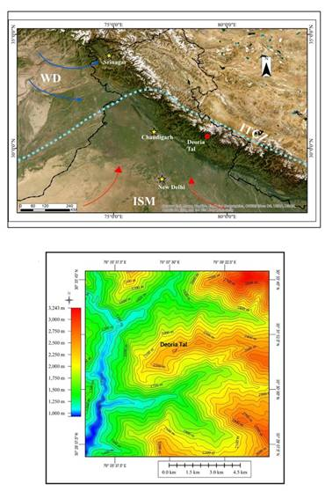
Context: A high-resolution pollen study from Deoria Tal (Garhwal Himalaya) by the Birbal Sahni Institute of Palaeosciences (BSIP) linked an abrupt monsoon failure at 4,200 years Before Present (BP) to the eastward migration of the Indus Valley Civilisation (IVC).
-
- The Oak/Pine pollen ratio– Oak (Quercus) indicates moist monsoon conditions, whereas Pine (Pinus) thrives in drier climates.
- 4.2 ka Event: A major global megadrought event around 2200 BCE (4,200 years ago) that triggered climate shifts worldwide.
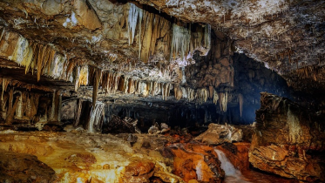
- Meghalayan Age: The 4.2 ka event marks the official boundary between the Northgrippian Age and the Meghalayan Age (the current geological age of the Holocene epoch, ratified by the ICS in 2018).
- Global Synchronization: Linked to the collapse of the Akkadian Empire in Mesopotamia, the Old Kingdom in Egypt, and the Liangzhu culture in China.
- Impact on Harappans: Diminished seasonal flooding of Indus and Ghaggar-Hakra rivers forced Harappans to shift from urban centers to rural agriculture further east toward the Ganga-Yamuna Doab.
- Climatic Drivers: Stronger El Nino phases combined with a strongly negative Indian Ocean Dipole (IOD) suppressed the Indian Summer Monsoon (ISM).
- Mawmluh Cave: The Global Boundary Stratotype Section and Point (GSSP) for the Meghalayan Age is formally designated at Mawmluh Cave in Meghalaya, India.
-
- BSIP: Birbal Sahni Institute of Palaeosciences is an autonomous institution under the Department of Science and Technology (DST), located in Lucknow.
- Harappan De-urbanization Phase: Late Harappan Phase (c. 1900–1300 BCE) characterized by a loss of script, standardized weights, and large public architecture.
(PIB)
Spread the Word