Indian Polity & Governance
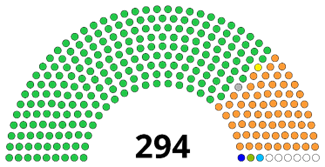
West Bengal Legislative Assembly Election 2026:
Context
-
- Election process formally begins with issuance of notification, marking start of nomination filing.
- Conducted under supervision of the Election Commission of India (ECI), a constitutional body (Article 324).
- Model Code of Conduct (MCC) becomes effective from announcement, ensuring free and fair elections.
- Elections are conducted in phases for logistical and security reasons.
- ECI ensures universal adult franchise (18+) participation.
- Use of Electronic Voting Machines (EVMs) and VVPAT ensures transparency.
- Electoral rolls are updated prior to elections.
- Candidates must meet eligibility criteria under Representation of People Act, 1951.
- Election expenses are monitored to prevent undue influence.
(TH)
International Relations
West Asia Crisis & India’s Strategic Concerns:
Context
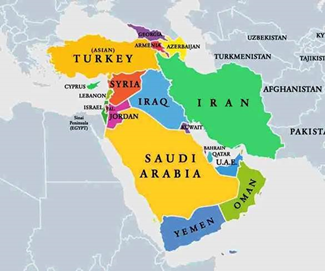
Escalation in West Asia tensions impacting global energy and geopolitics.
-
- West Asia (Middle East) is crucial as it accounts for ~60% of India’s crude oil imports, making India highly dependent on the region.
- Around 20% of global oil trade passes through the Strait of Hormuz, making it a critical chokepoint vulnerable to conflict.
- Any disruption leads to sharp rise in crude prices, increasing India’s import bill significantly.
- India imports nearly 85% of its crude oil, exposing it to external shocks.
- Rising oil prices contribute to imported inflation, affecting fuel, transport, and food prices.
- Conflict impacts Indian diaspora (~8–9 million in Gulf region), raising evacuation and remittance concerns.
- India follows a policy of strategic autonomy, balancing relations with Israel, Iran, and Arab countries.
- It also affects projects like Chabahar Port, crucial for connectivity to Central Asia.
- Energy security measures include Strategic Petroleum Reserves (SPR) at Visakhapatnam, Mangaluru, and Padur.
(TH)
Geography, Mapping, Ecology & Environment and DM
Climate Finance Discussions:
Context
Debate on climate finance commitments.
-
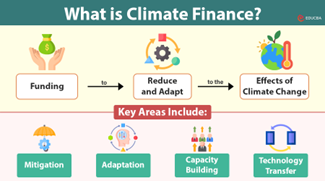
- Climate finance refers to financial support from developed to developing countries for climate mitigation and adaptation.
- Developed countries committed to $100 billion annually, though targets are often unmet.
- Funds are channelled through mechanisms like Green Climate Fund (GCF).
- Developing countries demand equity and CBDR principle (Common But Differentiated Responsibilities).
- Finance is essential for renewable energy, climate resilience, and technology transfer.
- Lack of funding slows down climate action in developing countries.
- Climate finance includes grants, loans, and investments.
- Transparency and accountability are major concerns.
- It is central to Paris Agreement implementation.
(TH)
Secretive Jungle Cats & Habitat Study:
Context
Study highlights need for habitats outside protected areas.
-
- Many species survive outside Protected Areas (PAs) like national parks and sanctuaries.
- Jungle cats are small wild felids, playing important roles in ecosystem balance.
- Conservation outside PAs is called “landscape-level conservation”.
- Human-wildlife conflict increases when habitats shrink.
- Biodiversity conservation requires corridors and buffer zones.
- India’s protected areas cover only about 5% of geographical area, making outside conservation crucial.
- Highlights importance of community participation in conservation.
- Such species are often understudied and neglected in policy focus.
- Habitat fragmentation due to urbanization and agriculture is a major threat.

(TH)
Science & Technology
exRNA Research:
Context
Research on extracellular RNA (exRNA).
-
- Extracellular RNA (exRNA) refers to RNA molecules found outside cells in bodily fluids.
- They play a role in cell-to-cell communication.
- exRNA can act as biomarkers for diseases, including cancer.
- Useful for non-invasive diagnostics (liquid biopsy).
- Research is part of advances in molecular biology and genomics.
- Helps in understanding gene expression and regulation.
- Potential use in targeted therapies and precision medicine.
- Linked to emerging field of RNA-based therapeutics.
- Advances accelerated post mRNA vaccine success.


(TH)
Defence
Drone Warfare & Changing Military Strategy:
Context
Analysis of drone warfare in modern conflicts.
-
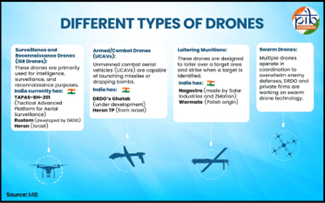
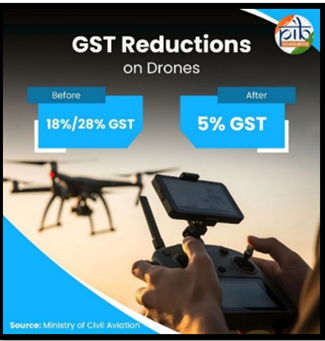
- Drones (UAVs) are increasingly used for surveillance, reconnaissance, and combat.
- They are cost-effective compared to traditional fighter aircraft.
- Used for precision strikes, reducing human risk.
- Modern warfare is shifting towards technology-driven combat systems.
- Drones play key role in asymmetric warfare.
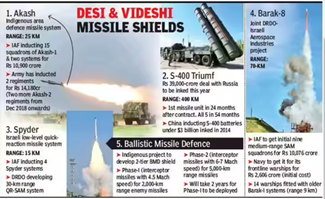
- Counter-drone systems are becoming essential for national security.
- India is investing in indigenous drone technology.
- Raises concerns about cybersecurity and misuse by non-state actors.
- Integrated into network-centric warfare systems.
- Important for future warfare trends and defence preparedness.
(IE)
Internal Security
FATF Report on India’s Action Against Fraud Networks:
Context
FATF report highlighted India’s actions against financial fraud and illegal networks.
-
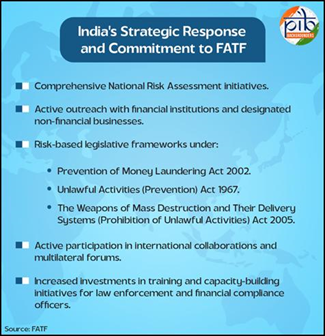
- The Financial Action Task Force (FATF) is an intergovernmental body that combats money laundering and terror financing.
- It maintains Grey List and Black List to monitor non-compliant countries.
- India has strengthened its framework through PMLA (Prevention of Money Laundering Act).
- Enforcement agencies like ED and FIU-IND play key roles in monitoring suspicious transactions.
- FATF compliance improves international credibility and investment attractiveness.
- Non-compliance can lead to economic sanctions and financial isolation.
- Digital fraud and fintech expansion have increased new-age financial crimes.
- FATF recommendations are not legally binding but widely enforced globally.
- India has been advocating stronger global cooperation against illicit financial flows.
(TH)
Anti-Maoist Campaign Continuity:
Context
Discussion on continuity of anti-Maoist operations across governments.
-
- Maoism (Left Wing Extremism) is one of India’s major internal security challenges, especially in central and eastern regions.
- Affected areas are known as the “Red Corridor”, spanning states like Chhattisgarh, Jharkhand, Odisha, and Maharashtra.
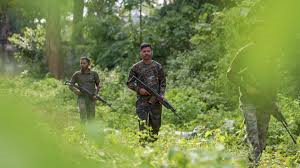
- Operations involve Central Armed Police Forces (CRPF, CoBRA units) and state police.
- Strategy combines security measures + development initiatives.
- Government launched schemes like Aspirational District Programme to address root causes.
- Maoists exploit issues like land alienation, tribal rights, and underdevelopment.
- Decline in incidents shows policy continuity across political regimes.
- Technology like drones and surveillance is increasingly used.
- Focus on road connectivity and governance penetration in remote areas.
(TH)
Government Schemes
PM-KUSUM Scheme 2.0 (Proposed Changes):
Context
Government may include battery storage under revamped scheme.
-
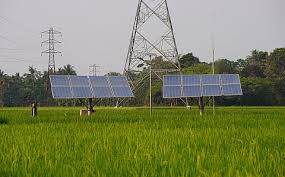
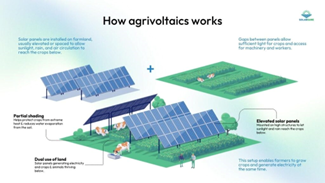
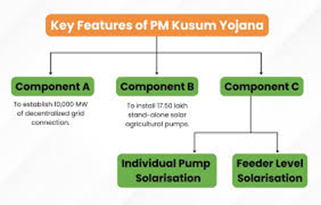
- PM-KUSUM aims to promote solar energy in agriculture sector.
- It supports installation of solar pumps and grid-connected solar plants.
- Inclusion of battery storage will address intermittency of solar power.
- Helps farmers reduce dependence on diesel and grid electricity.
- Promotes decentralized renewable energy generation.
- Farmers can earn additional income by selling surplus power.
- Supports India’s target of non-fossil fuel energy capacity expansion.
- Reduces carbon emissions and improves sustainability.
- Aligns with climate commitments under Paris Agreement.
(IE)
Spread the Word