International Developments
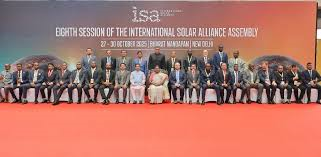
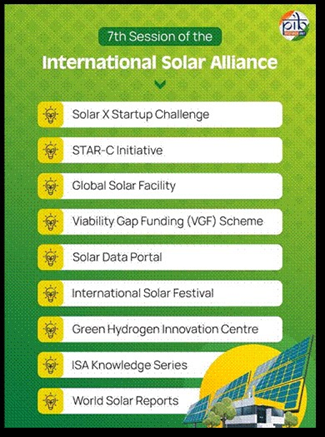
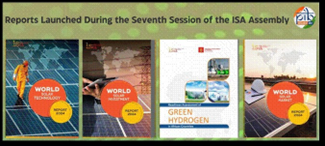
International Solar Alliance Expands Membership:
Context
The International Solar Alliance continues expanding membership to promote solar energy adoption globally.
-
- The alliance was launched by India and France in 2015.
- Headquarters: Gurugram, India.
- It aims to promote solar energy deployment among sun-rich countries.
- Originally limited to tropical countries between the Tropics of Cancer and Capricorn.
- Later expanded to include all UN member states.
- It focuses on solar energy financing and technology cooperation.
- It works with multilateral institutions such as the World Bank.
- ISA promotes solar mini-grids and rooftop solar systems.
- It supports energy transition in developing countries.
- It is one of the few treaty-based international organizations headquartered in India.
(TH)
International Relations
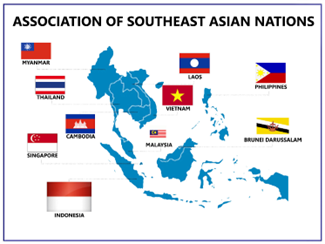
India-ASEAN Trade Cooperation Review:
Context
India reviewed trade relations with the Association of Southeast Asian Nations to strengthen economic cooperation.
-
- ASEAN was established in 1967 through the Bangkok Declaration.
- Headquarters: Jakarta, Indonesia.
- Members: 10 Southeast Asian countries.
- India became a sectoral dialogue partner in 1992.
- India-ASEAN relations were upgraded to Strategic Partnership in 2012.
- ASEAN is central to India’s Act East Policy.
- India and ASEAN signed a Free Trade Agreement in goods (2010).
- The region is important for Indo-Pacific maritime connectivity.
- ASEAN countries collectively form one of India’s largest trading partners.
- Cooperation areas include digital economy, connectivity, and maritime security.
(TH+ET)
Economy
Global Digital Payments Growth:
Context
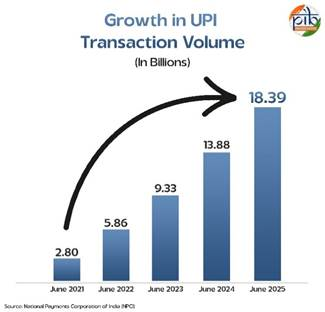
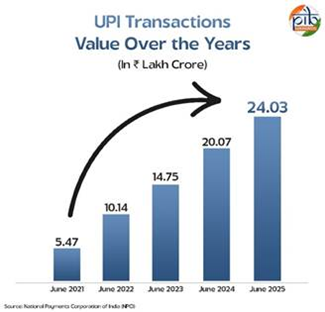
India’s digital payments ecosystem continues to expand rapidly, led by the Unified Payments Interface.
-
- UPI was launched in 2016.
-
- It is developed by the National Payments Corporation of India.
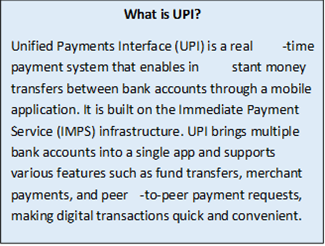
- UPI enables instant real-time bank-to-bank transfers.
- It uses mobile-based payment applications.
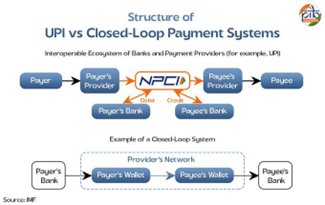
- UPI supports interoperability across banks.
- It operates under the Immediate Payment Service (IMPS) infrastructure.
- UPI is being expanded internationally through partnerships with several countries.
- Digital payments promote financial inclusion and transparency.
- India has one of the largest digital payments markets globally.
- UPI is a key pillar of India’s Digital Public Infrastructure.
(ET)
RBI Highlights Financial Stability Risks:
Context
The Reserve Bank of India highlighted risks from global financial volatility in its macro-financial assessment.
-
- RBI operates under the Reserve Bank of India Act, 1934.
- Monetary policy is conducted by the Monetary Policy Committee (MPC).
- MPC consists of six members.
- Inflation targeting framework was introduced in 2016.
- Target inflation: 4% ± 2%.
- RBI uses repo rate as the primary policy tool.
- Reverse repo rate absorbs excess liquidity.
- Repo rate is the rate at which RBI lends to commercial banks.
- Liquidity management tools include open market operations.
- Financial stability monitoring includes assessment of systemic risks.
(ET)
Geography, Mapping, Ecology & Environment and DM
Global Concerns on Ocean Warming:
Context
Scientists highlighted accelerating ocean warming and marine heatwaves, which affect global climate systems.
-
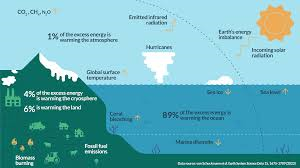
- Oceans absorb about 90% of excess heat from global warming.
- Rising ocean temperatures cause marine heatwaves.
- Coral reefs are highly vulnerable to thermal stress and bleaching.
- Ocean warming contributes to sea level rise through thermal expansion.
- Melting of glaciers and ice sheets further increases sea level.
- The Intergovernmental Panel on Climate Change assesses global climate science.
- Ocean warming affects marine biodiversity and fisheries.
- Warmer oceans intensify tropical cyclones.
- Ocean circulation patterns such as thermohaline circulation influence global climate.
- Climate mitigation requires reduction of greenhouse gas emissions.
(TH)
Strengthening India’s Blue Economy Strategy:
Context
India highlighted expansion of the Blue Economy framework for sustainable use of ocean resources.
-
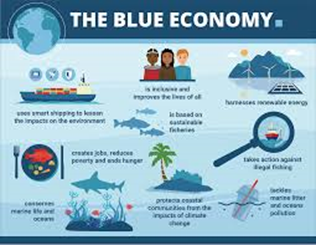
- Blue Economy focuses on sustainable use of ocean resources for economic growth.
- It includes sectors like fisheries, maritime transport, offshore energy and marine biotechnology.
- India has a coastline of about 7,500 km.
- The country has 12 major ports and over 200 minor ports.
- Marine fisheries provide livelihood to millions of coastal communities.
- Offshore wind and tidal energy are emerging energy sources.
- India’s Exclusive Economic Zone (EEZ) extends 200 nautical miles from the coastline.
- The Sagarmala Programme aims to modernize ports and logistics.
- Blue Economy initiatives must balance economic development and marine ecosystem protection.
- Ocean resources also include polymetallic nodules in deep sea regions.
(TH)
Global Push for Critical Minerals Supply Chains:
Context
India emphasised cooperation with partner countries to secure supply chains for critical minerals used in clean energy technologies.
-
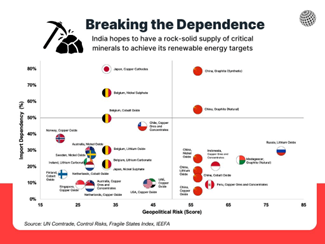
- Critical minerals include lithium, cobalt, nickel, graphite and rare earth elements.
- They are essential for batteries, renewable energy, semiconductors and electric vehicles.
- India launched the National Critical Mineral Mission to secure mineral supplies.
- Lithium-ion batteries are widely used in electric vehicles and energy storage systems.
- Rare earth elements are important for magnets used in wind turbines and electronics.
- China dominates global rare earth processing.
- India has identified critical mineral blocks for exploration and mining.
- Recycling of minerals is emerging as an important strategy.
- Strategic mineral supply chains are linked to energy transition and technological security.
- India is strengthening partnerships with Australia and other resource-rich countries.
(TH+ET)
Science & Technology
Expansion of India’s Space Sector Reforms:
Context
India continues reforms to encourage private sector participation in the space industry.
-
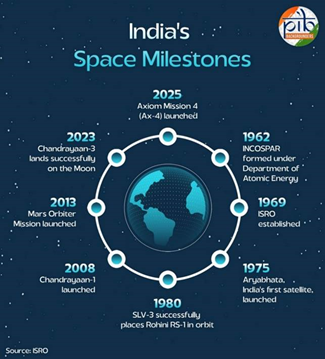
- The Indian space sector reforms were announced in 2020.
- The reforms allow private companies to participate in satellite launches and space missions.
- Indian National Space Promotion and Authorisation Centre (IN-SPACe) regulates private space activities.
- NewSpace India Limited handles commercial space activities.
- Indian Space Research Organisation focuses on research and development.
- India launched the Indian Space Policy 2023 to support private participation.
- Private startups are working on launch vehicles, satellite manufacturing and space data services.
- India’s space economy is expected to grow significantly by 2030.
- Satellite data supports weather forecasting, navigation and disaster management.
- India operates satellite navigation system NavIC.
(IE+PIB)
Government Schemes and Initiatives
Expansion of India’s Green Hydrogen Programme:
Context
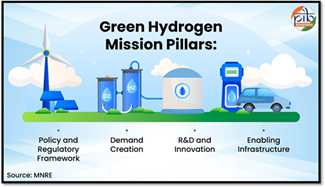
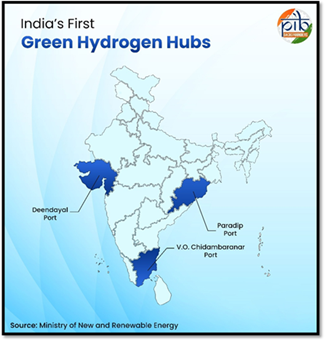
India accelerated implementation of the National Green Hydrogen Mission to boost clean energy production.
-
- The mission was approved in 2023.
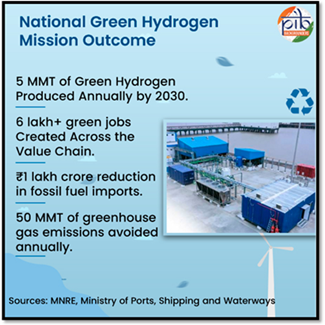
- Target: 5 million tonnes of green hydrogen production annually by 2030.
- It aims to reduce dependence on imported fossil fuels.
- Green hydrogen is produced through electrolysis using renewable energy.
- It differs from grey hydrogen, which is produced using natural gas.
- Key sectors: fertilizers, refineries, and steel manufacturing.
- The mission is implemented by the Ministry of New and Renewable Energy.
- It supports development of electrolyser manufacturing capacity.
- India aims to become a global export hub for green hydrogen.
- Hydrogen fuel produces water as the only by-product during combustion.
(ET+PIB)
National Mission on Natural Farming Expansion:
Context
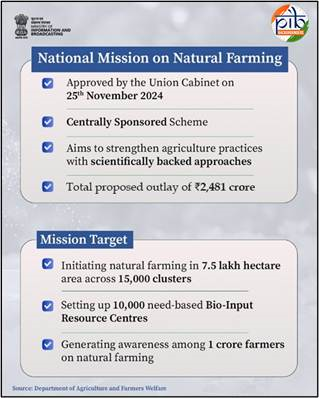
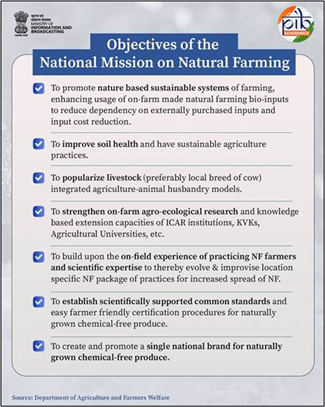
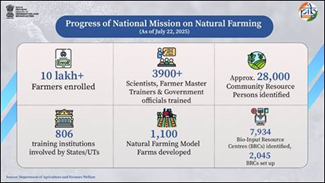
The Union government reviewed progress of the National Mission on Natural Farming aimed at promoting chemical-free agriculture.
-
- Natural farming promotes chemical-free agriculture using locally available inputs.
- The mission was launched as a centrally sponsored scheme.
- It is implemented under the Ministry of Agriculture and Farmers Welfare.
- Natural farming emphasizes cow-based inputs such as Jeevamrit and Beejamrit.
- The approach aims to improve soil microbial activity.
- It reduces dependence on synthetic fertilizers and pesticides.
- It is closely associated with Subhash Palekar Natural Farming (SPNF) principles.
- The mission supports cluster-based farmer adoption.
- It is linked with sustainable agriculture and climate-resilient farming systems.
- Natural farming differs from organic farming in input certification and methodology.
(PIB+TH)
Spread the Word