Indian Polity & Governance
India’s Digital Competition Law Discussion:
Context: Government reviewing digital competition regulation for Big Tech firms.
-
- Competition Act, 2002 regulates anti-competitive practices.
- Competition Commission of India (CCI) is statutory body.
- Abuse of dominant position prohibited.
- Cartelisation punishable under Act.
- Digital markets show network effects.
- Data advantage creates entry barriers.
- Proposed Digital Competition framework may regulate Systemically Important Digital Intermediaries (SIDIs).
- Ex-ante regulation proposed for digital platforms.
- CCI can impose penalties up to 10% of turnover.
- Competition law distinct from Consumer Protection Act.
- Merger control threshold under Competition Act.
- Competition law ensures market efficiency & consumer welfare.
(IE)
Union Cabinet Approves Renaming of “Kerala” to “Keralam”:
Context: The Union Cabinet approved a proposal to rename the State of Kerala as “Keralam”, initiating the constitutional process for altering the state’s name under Article 3 of the Constitution.
-
- Kerala was established as a state during the States Reorganisation on linguistic lines in 1956.
- The Kerala (Alteration of Name) Bill, 2026 will be introduced in Parliament after the President refers it to the Kerala Legislative Assembly for its views as required under Article 3 of the Constitution.
- Article 3 empowers Parliament to create new states and alter names/boundaries.
- The renaming reflects a push toward recognising linguistic and cultural identity in official nomenclature.
- The Kerala Assembly passed a resolution in June 2024 unanimously requesting the renaming.
- Constitutional process: Cabinet → President → State Assembly → Parliament (procedure under Article 3).
- The decision comes ahead of Assembly elections in Kerala (expected April–May 2026).
- Debate on renaming often includes historical, cultural and political considerations.
- Similar renamings have occurred in India, such as Bombay → Mumbai, Madras → Chennai, etc.

(TH+ET)
International Relations
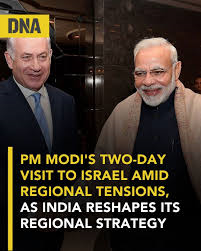
PM Modi Visits Israel Amid Middle East Tensions:
Context: Prime Minister Narendra Modi arrived in Israel on 25 February 2026 on a two-day bilateral visit aimed at strengthening strategic, technological and defence cooperation, at a time of rising US-Iran tensions in the Middle East.
-
- India-Israel relations have expanded significantly since 1992 diplomatic recognition.
- Defence and technology cooperation are key pillars, including joint R&D.
- Israel is a major partner in defence equipment and homeland security tech.
- India often balances its West Asia policy between Israel and Arab states.
- Regional instability (e.g., Iran tensions) impacts Indian diaspora in Gulf countries.
- India emphasises strategic autonomy and non-alignment in foreign policy.
- India is one of Israel’s top trade partners in Asia.
- Diplomatic visits often include parliament addresses and memorial visits (e.g., Yad Vashem).
- Broader context: Middle East geopolitics influences energy security and diaspora welfare.
(ET)
Economy
India’s GDP Growth Outlook – SBI Report:
Context: An SBI Research report indicated that India’s GDP growth for Q3 FY26 is likely to exceed 8% despite global headwinds, reflecting resilient domestic demand.
-
- Q3 FY26 refers to October–December 2025 quarter.
- Growth driven by rural and urban consumption.
- High-frequency indicators reflect economic momentum.
- India’s strong macro performance persists amid uncertainties.
- Global headwinds include trade tariff pressures and slowing investment.
- Growth outlook impacts monetary and fiscal policy decisions.
(ET)
RBI Liquidity Operations Continue:
Context: RBI conducted liquidity absorption through Variable Rate Reverse Repo auctions.
-
- RBI regulates money supply.
- Repo Rate = Lending rate to banks.
- Reverse Repo = Borrowing from banks.
- VRRR absorbs surplus liquidity.
- CRR = Mandatory reserve, no interest.
- SLR = Liquid asset maintenance.
- Inflation targeting: 4% ± 2%.
- MPC has 6 members.
- Governor has casting vote.
- Monetary policy decided bi-monthly.
(ET)
Geography, Mapping, Ecology & Environment and DM
India’s Carbon Market Framework:
Context: Progress on operationalising Indian Carbon Market (ICM).
-
- Carbon market incentivises emission reductions.
- Based on “cap-and-trade” principle.
- Energy Conservation (Amendment) Act, 2022 enables carbon trading.
- Bureau of Energy Efficiency (BEE) nodal agency.
- Carbon credit = 1 tonne CO₂ equivalent reduction.
- Voluntary carbon markets operate globally.
- EU ETS is largest carbon market.
- India earlier had Perform Achieve Trade (PAT) scheme.
- Carbon pricing internalises environmental cost.
- Helps meet NDC targets.
- Greenwashing risk if not monitored.
-
- Carbon offset different from carbon tax.
(TH+PIB)
Supreme Court on Environmental Compensation:
Context: Supreme Court reiterated principles related to environmental compensation and polluter pays doctrine.
-
- “Polluter Pays Principle” part of environmental jurisprudence.
- Derived from Principle 16 of Rio Declaration (1992).
- Recognised in India under Article 21 (Right to Life).
- National Green Tribunal (NGT) can impose environmental compensation.
- Absolute liability principle evolved in Oleum Gas Leak Case (1986).
- Sustainable development is balancing growth & ecology.
- Precautionary principle shifts burden of proof.
- Environment Protection Act, 1986 provides broad powers.
- Water Act, 1974 & Air Act, 1981 regulate pollution.
- Compensation may include restoration cost + deterrent penalty.
- Environmental compensation different from criminal punishment.
- CPCB issues pollution norms at central level.
(TH)
Government Schemes
Government Push for PM-Surya Ghar: Rooftop Solar Expansion:
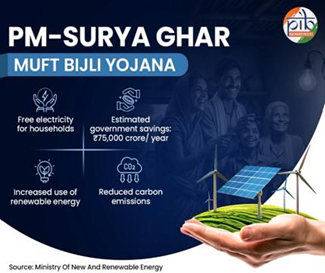
Context: Government reviewed progress under PM-Surya Ghar: Muft Bijli Yojana, aiming to increase rooftop solar installations.
-
- Launched in 2024 to promote rooftop solar in households.
- Target: 1 crore households.
- Subsidy provided directly to beneficiaries.
- Implemented through Ministry of New and Renewable Energy (MNRE).
- Rooftop solar reduces transmission losses.
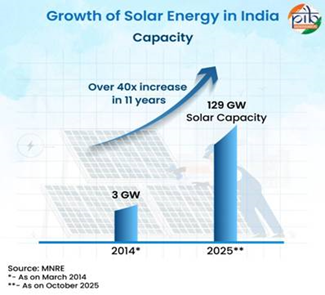
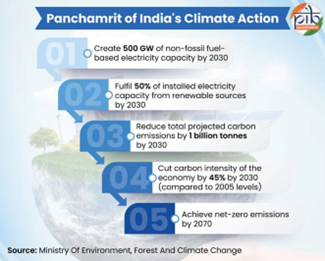
- Supports India’s 500 GW non-fossil fuel target by 2030.
-
- Linked to India’s NDC commitments under Paris Agreement.
- Net-metering mechanism allows selling excess electricity.
- Solar photovoltaic cells primarily made of silicon.
- India is part of the International Solar Alliance (ISA).
- Solar energy is intermittent – requires storage integration.
- Rooftop solar reduces DISCOM financial stress if properly managed.
(PIB+TH)
Spread the Word